02 December 2025
Visible Changes in Face, Hair, and Nails During Menopause

Reading time 9 min
Reading time 9 min
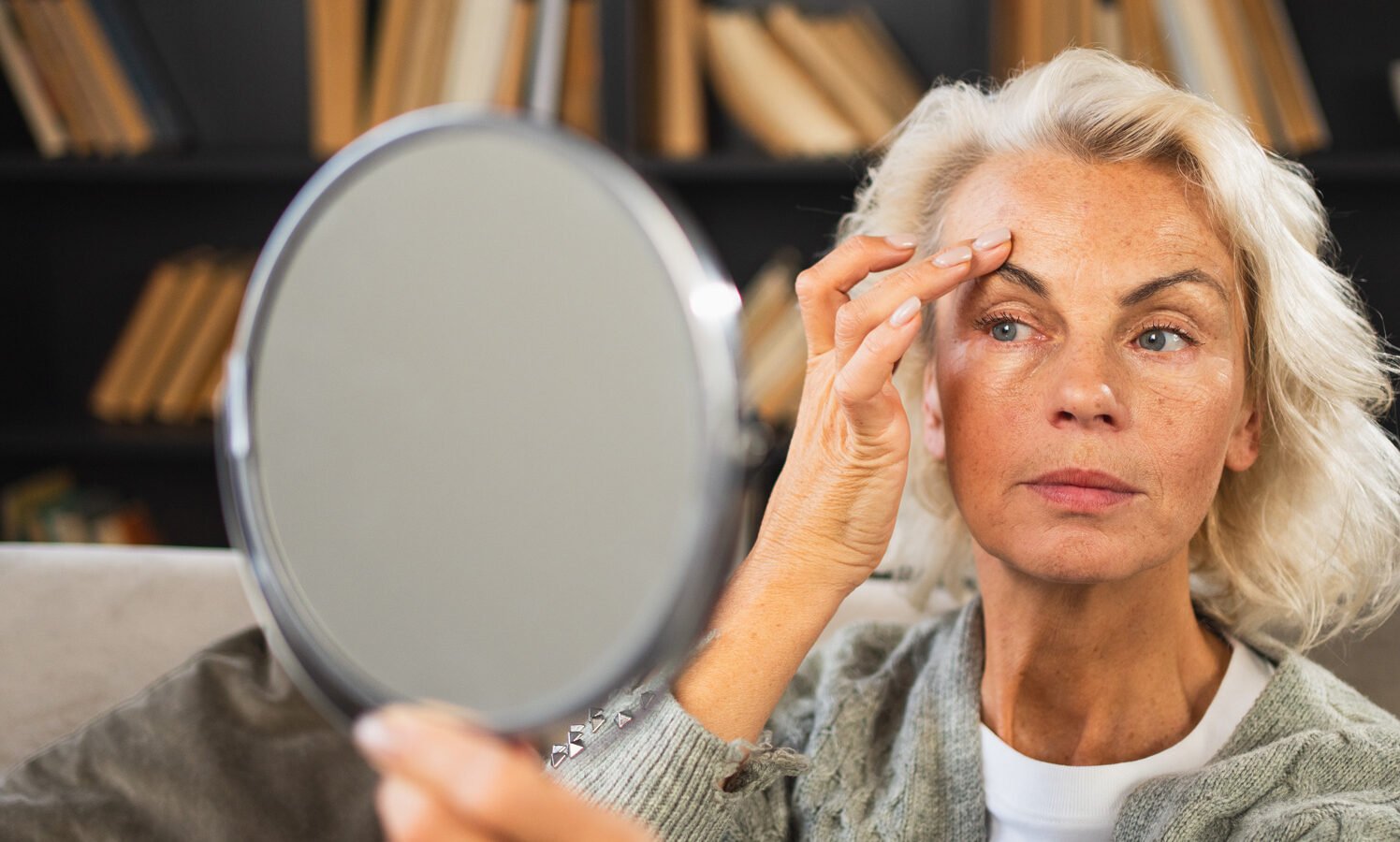
Visible changes during menopause transition aren’t simply the slow march of time. These menopause skin, hair, nail changes are also a biological reaction to hormonal changes: a distinct process triggered by menopause that unfolds independently of your chronological age. Your skin doesn’t snap back the way it used to. You’re shedding more hair in the shower. Don’t get me started on the hated chin hairs that seem to appear overnight! It’s easy to blame “just aging,” but the science tells a more nuanced story.
What causes visible changes in skin, hair, and nails during menopause?
A sharp drop in estrogen reduces collagen, elastin, hydration, and blood flow while shifting androgen balance. That is why skin looks thinner or dull, hair sheds or miniaturizes, and nails become brittle. Daily sunscreen, protein, resistance training, smart skincare, and medical options can help.
Aging and menopause are often spoken of in the same breath, but research shows they’re separate, though intertwined, biological processes. Time alone doesn’t explain the sudden acceleration of skin thinning, collagen loss, or hair changes that begin around the final menstrual period1.
Age-related changes happen to everyone and are largely irreversible: ultraviolet (UV) damage, cell senescence, and the gradual decline in stem cells and circulation. These affect both sexes and progress steadily with time.
Menopause-accelerated changes appear suddenly mostly due to estrogen’s fall and are partly reversible. They include collagen and elastin loss, skin thinning, blood flow loss, and changes in fat distribution. The most definitive evidence is provided by studies on young women with premature ovarian insufficiency (menopause before age 40). They develop identical symptoms to older menopausal women despite their young age. Menopause is a distinct biological process, not just “getting older.”
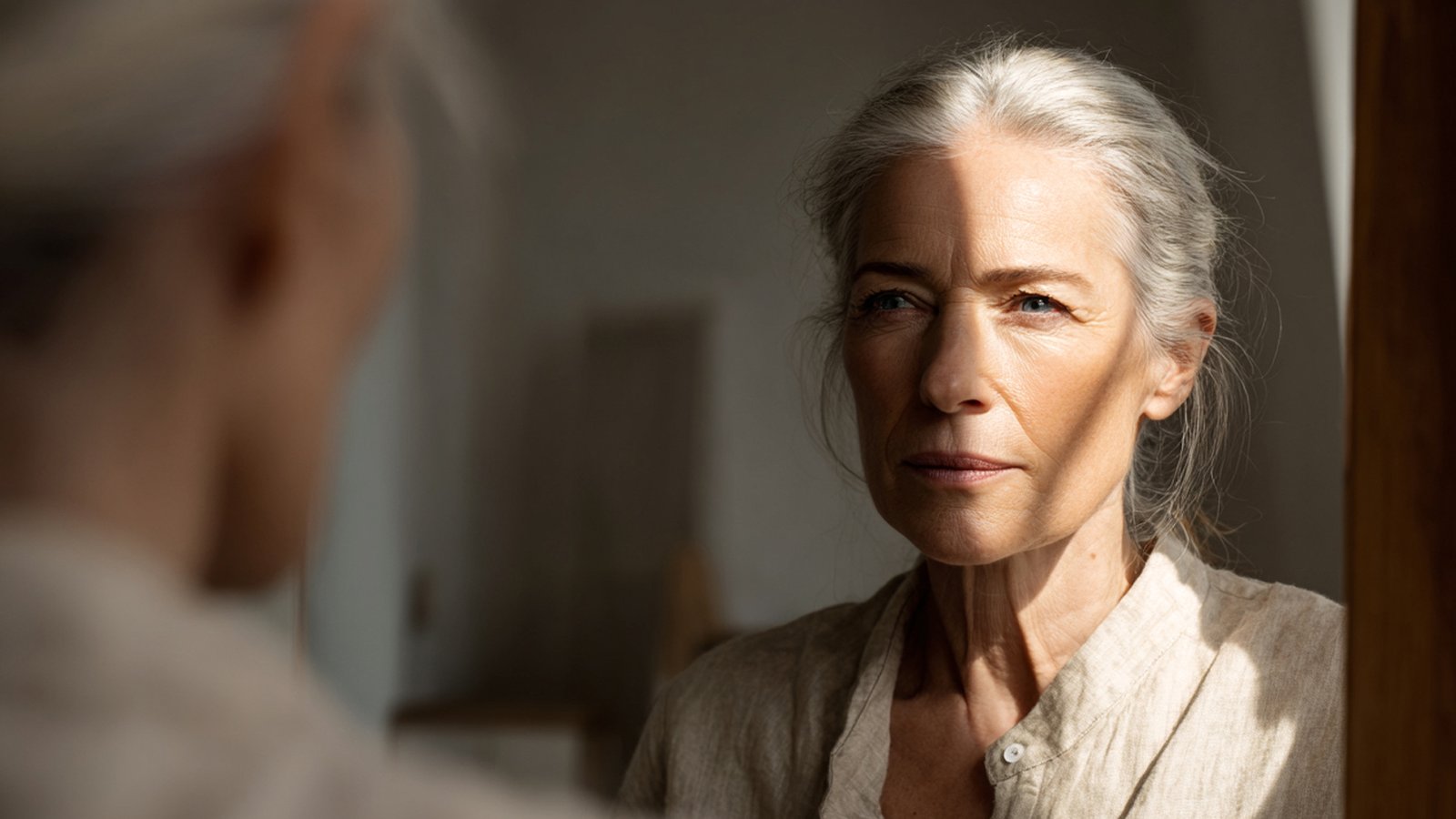
Estrogen is a master regulator of skin structure. It stimulates the production of collagen (the protein that gives skin firmness) and elastin (the one that gives it bounce) while suppressing enzymes that break them down. When estrogen drops, that balance collapses.
“You can see and feel the difference: skin becomes thinner, drier, and slower to repair. Collagen loss can reach 30% in just five years after menopause, and the dermis continues thinning by about 1% per year after that. The result is visible sagging and fine wrinkles.”
Elastin loss is particularly cruel – it’s irreversible. Once elastic fibers degrade, the skin simply can’t “snap back” the way it used to. That’s why the lower face and neck are often the first to show changes1, 2.
Estrogen also protects tiny blood vessels in the skin. It promotes nitric oxide, which keeps them open and maintains a healthy glow. As levels fall, circulation drops, and the skin may look dull or sallow3.
Then there’s hydration. Estrogen stimulates molecules that trap water in the skin barrier. Without it, moisture evaporates faster and the barrier becomes fragile, leading to dryness, itching, and sensitivity4.
And while estrogen plummets, androgens (testosterone and DHT) decline more gradually. This creates a temporary state of relative androgen dominance, explaining why some women suddenly develop oilier skin and larger pores, while others feel uncomfortably dry. Your individual pattern depends on how your skin’s hormone receptors respond5.


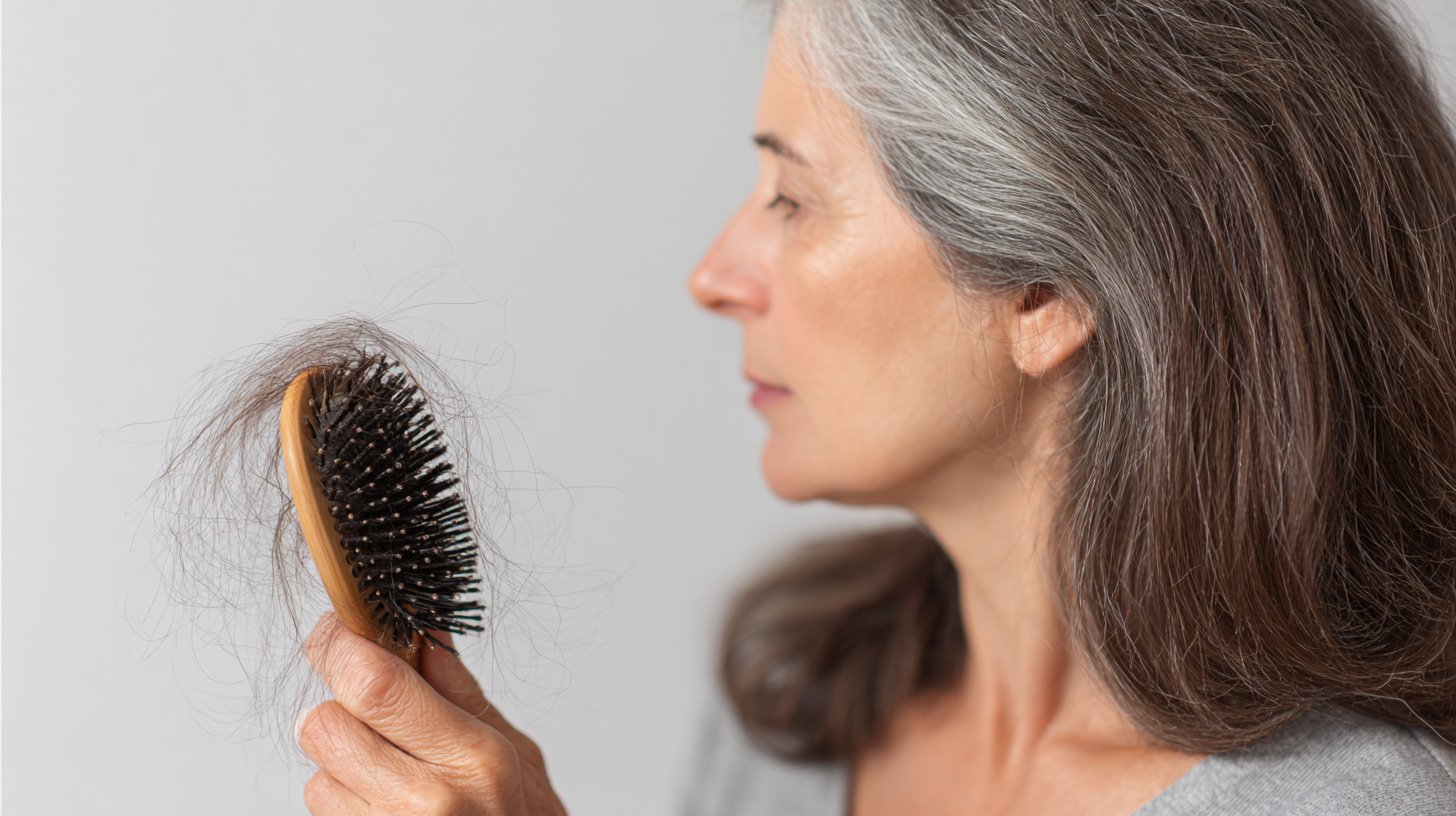
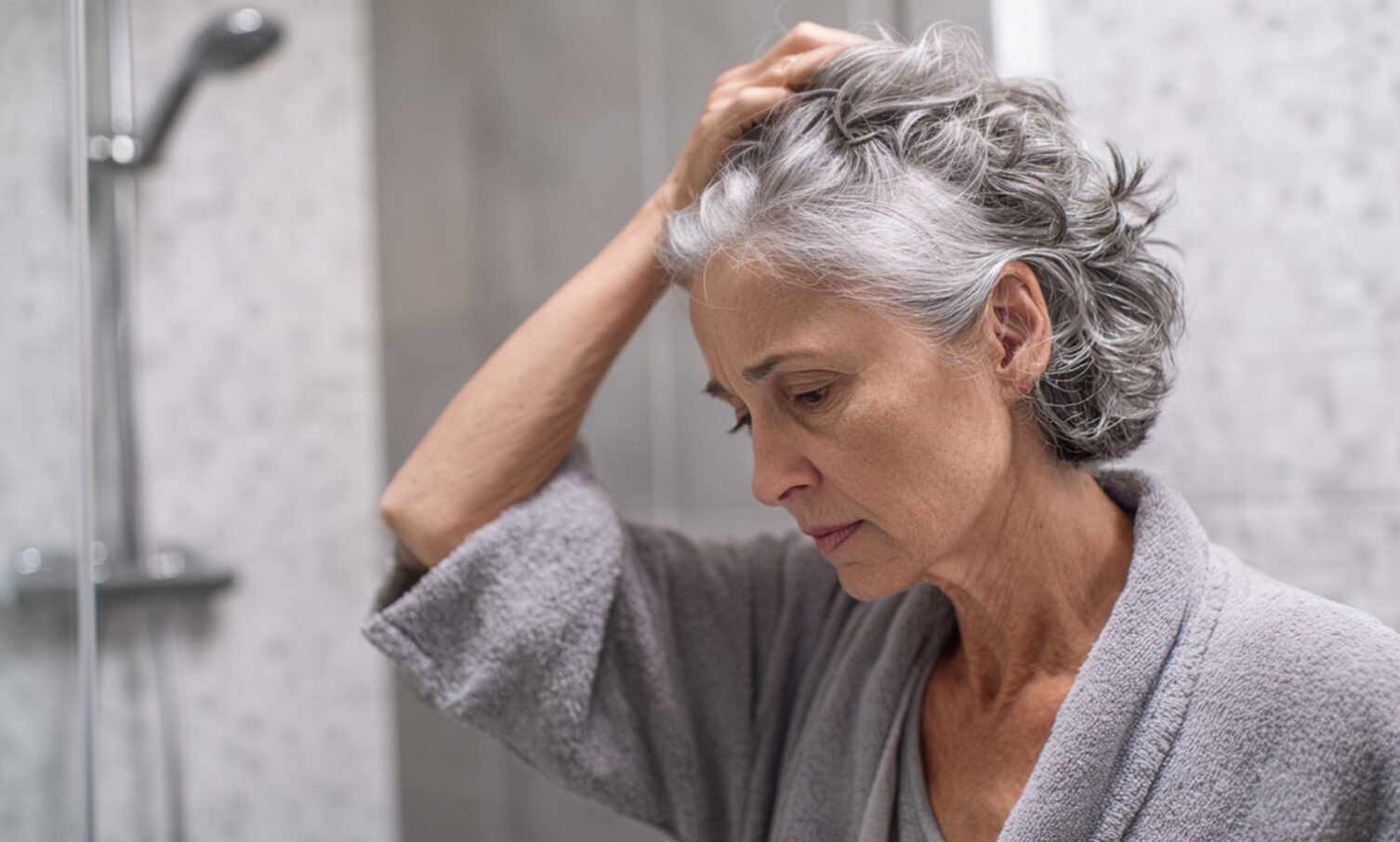
Hair follicles are highly hormone-sensitive. Estrogen lengthens the growth phase of hair, keeping it lush and full. As it declines, that phase shortens, leading to shedding and thinner strands. Meanwhile, androgen sensitivity can cause follicles on the scalp (especially at the crown) to shrink and produce finer hair.
This process, called miniaturization, underlies female pattern hair loss (FPHL), which affects approximately 52% of postmenopausal women. It’s not about “too much testosterone,” but about the follicles becoming more responsive to it while losing estrogen’s protective effect6.
And then there’s the paradox: losing hair where you want it, and growing it where you don’t. Roughly 40% of postmenopausal women notice increased chin or upper-lip hair. That’s because androgens stimulate facial hair follicles even as they inhibit scalp ones7, 8.
Eyebrows and lashes also thin out as prostaglandin levels fall (these are signaling molecules that regulate follicle growth). Lower estrogen and progesterone shorten the growth cycle, so brows and lashes shed sooner and grow back slower.
Your nails tell a quieter but equally revealing story. Around 35% of women over 60 report brittle nails: thin, splitting, or ridged. This is likely tied to declining estrogen’s effects on keratin, the structural protein of nails, though the research is thinner here than for skin or hair9.
Biotin supplementation (2.5 mg daily) has the best evidence so far, shown to increase nail thickness by about 25% after several months. But as with skin and hair, nutrition, hydration, and circulation all play supporting roles10.
There’s no magic cream or supplement that can replace estrogen’s exact effects, but understanding the biology helps you focus on what does matter.
Skin and bone share more than you’d think. Both lose about 2% of their collagen or mineral content per year in the decade after menopause, and both respond to estrogen decline.
In fact, jawbone resorption around the chin and jawline contributes to facial sagging – the “broken jawline” many women notice isn’t just skin, it’s bone loss beneath it11.
The scientific evidence reveals something important: visible changes during menopause transition result from both chronological aging and hormone-driven acceleration. The distinction matters because hormonal components may respond to intervention while purely age-related changes remain largely irreversible.
About 75% of early collagen and bone loss are hormonally driven, which means they can be mitigated with the right strategies: hormonal, nutritional, and behavioral.
Understanding this difference matters. It moves us away from fatalism (“nothing helps”) and from false promises (“this cream reverses menopause”).
You deserve to understand what’s happening in your body. Armed with this knowledge, you can make informed decisions about which interventions make sense for you and which claims to ignore.
Dr. Jūra Lašas
1.
Thornton, M. Estrogens and aging skin. (2013) https://pmc.ncbi.nlm.nih.gov/articles/PMC3772914/
2.
Kamp, E. et al. BC10: The impact of menopause on the skin and ageing process. (2022) https://onlinelibrary.wiley.com/doi/10.1111/bjd.21315
3.
Bentov, I. et al. The Effect of Aging on the Cutaneous Microvasculature. (2016) https://pmc.ncbi.nlm.nih.gov/articles/PMC4461519/
4.
Murakami, K. et al. Effect of estrogen/progesterone ratio on the differentiation and the barrier function of epidermal keratinocyte and three-dimensional cultured human epidermis. (2022) https://www.sciencedirect.com/science/article/abs/pii/S002432052200056X
5.
Kamp, E. et al. Menopause, skin and common dermatoses. Part 2: skin disorders. (2022) https://academic.oup.com/ced/article/47/12/2117/6966236?login=false
6.
Chaikittisilpa, S. et al. Prevalence of female pattern hair loss in postmenopausal women: a cross-sectional study. (2022) https://pubmed.ncbi.nlm.nih.gov/35357365/
7.
Ho, C. et al. Androgenetic Alopecia. (2024) https://www.ncbi.nlm.nih.gov/books/NBK430924/
8.
Ali, I. et et. Physiological changes in scalp, facial and body hair after the menopause: a cross-sectional population-based study of subjective changes. (2011) https://pubmed.ncbi.nlm.nih.gov/21128905/
9.
Chessa, M. et al. Pathogenesis, Clinical Signs and Treatment Recommendations in Brittle Nails: A Review. (2019) https://pubmed.ncbi.nlm.nih.gov/31749091/
10.
Chessa, M. et al. Pathogenesis, Clinical Signs and Treatment Recommendations in Brittle Nails: A Review. (2019) https://pmc.ncbi.nlm.nih.gov/articles/PMC6994568/
11.
Castelo-Branco, C. et al. Relationship between skin collagen and bone changes during aging. (1994) https://pubmed.ncbi.nlm.nih.gov/8015503/

Eat to Thrive
Healthy Body & Mind
Brain & Mind Wellness

Treatments & Supplements

Eat to Thrive

Understanding Menopause
Scientific Research
Understanding Menopause

Eat to Thrive

Lifestyle & Self-Care
Scientific Research

Exercise & Nutrition

Eat to Thrive
Symptoms Explained

Eat to Thrive
Eat to Thrive

Scientific Research
Treatments & Supplements

We use cookies and similar technologies to ensure the proper functioning of our website, personalize content, provide social media features, and analyze traffic. By clicking “I Agree”, you consent to the use of these technologies.
No results