25 November 2025
Medical Tests After 40: Your Smart Guide + Downloadable Tracker Inside

Reading time 7 min

Reading time 7 min
As we move through our 40s and beyond, it’s not just our hormones that change; our risks for certain diseases also increase. Modern medicine offers us the tools to catch many of these changes early, if we know what to ask for. And that’s a big if1,2,3,4.
I have created Your Smart Guide to Medical Tests after 40 to guide you through the maze of what’s essential, what’s optional, and what might just give you peace of mind. It’s a downloadable tracker that helps you prepare for your next doctor’s visit and take the guesswork out of screening.
What medical tests should women over 40 get?
Women 40+ should prioritise recommended screenings that catch silent risks early, like cardiometabolic labs, thyroid and iron/ferritin checks, and age-appropriate cancer screening, etc. Then personalise frequency by history and symptoms. Use the downloadable tracker below to log results and retest dates.
INTERACTIVE TRACKER
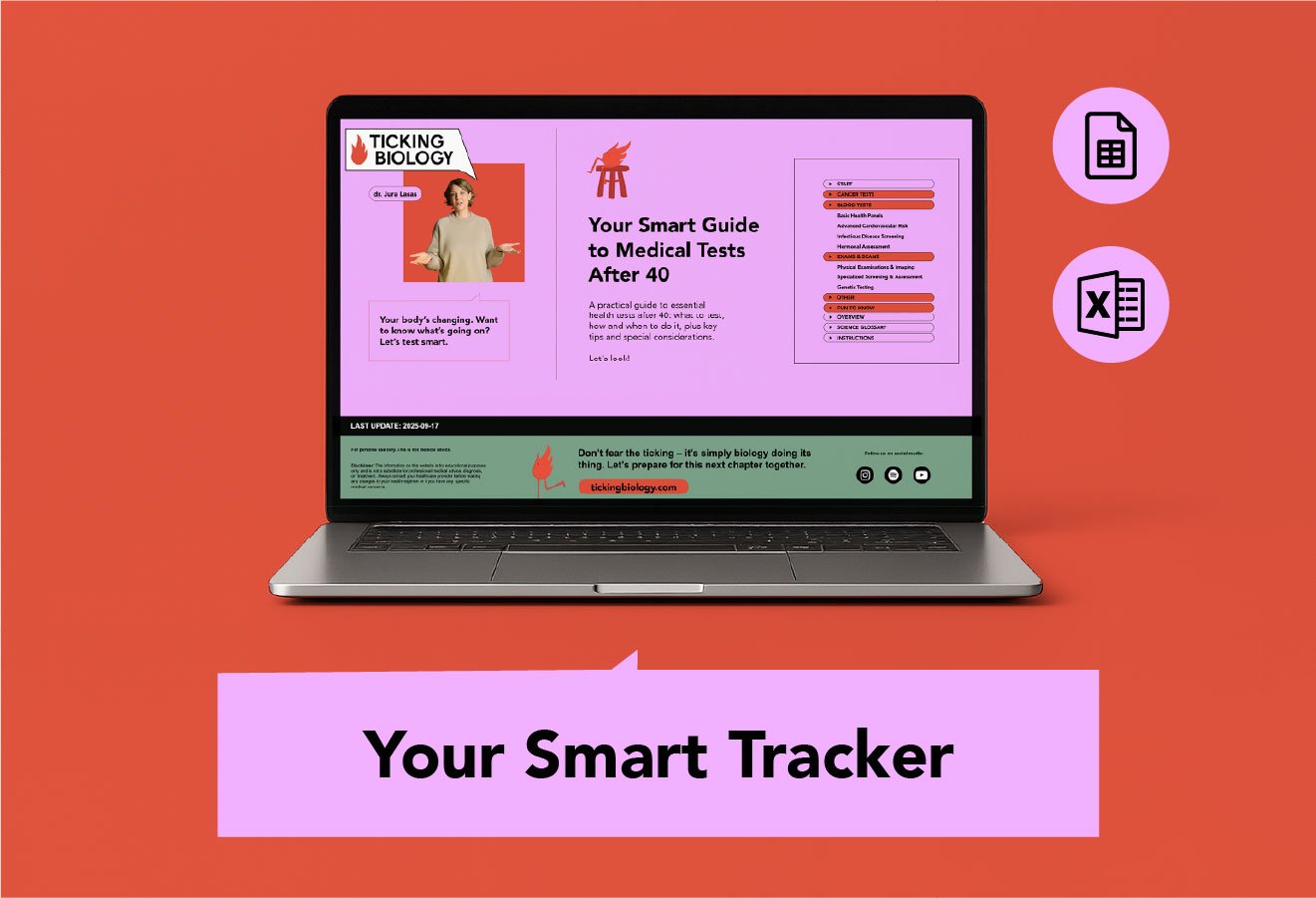

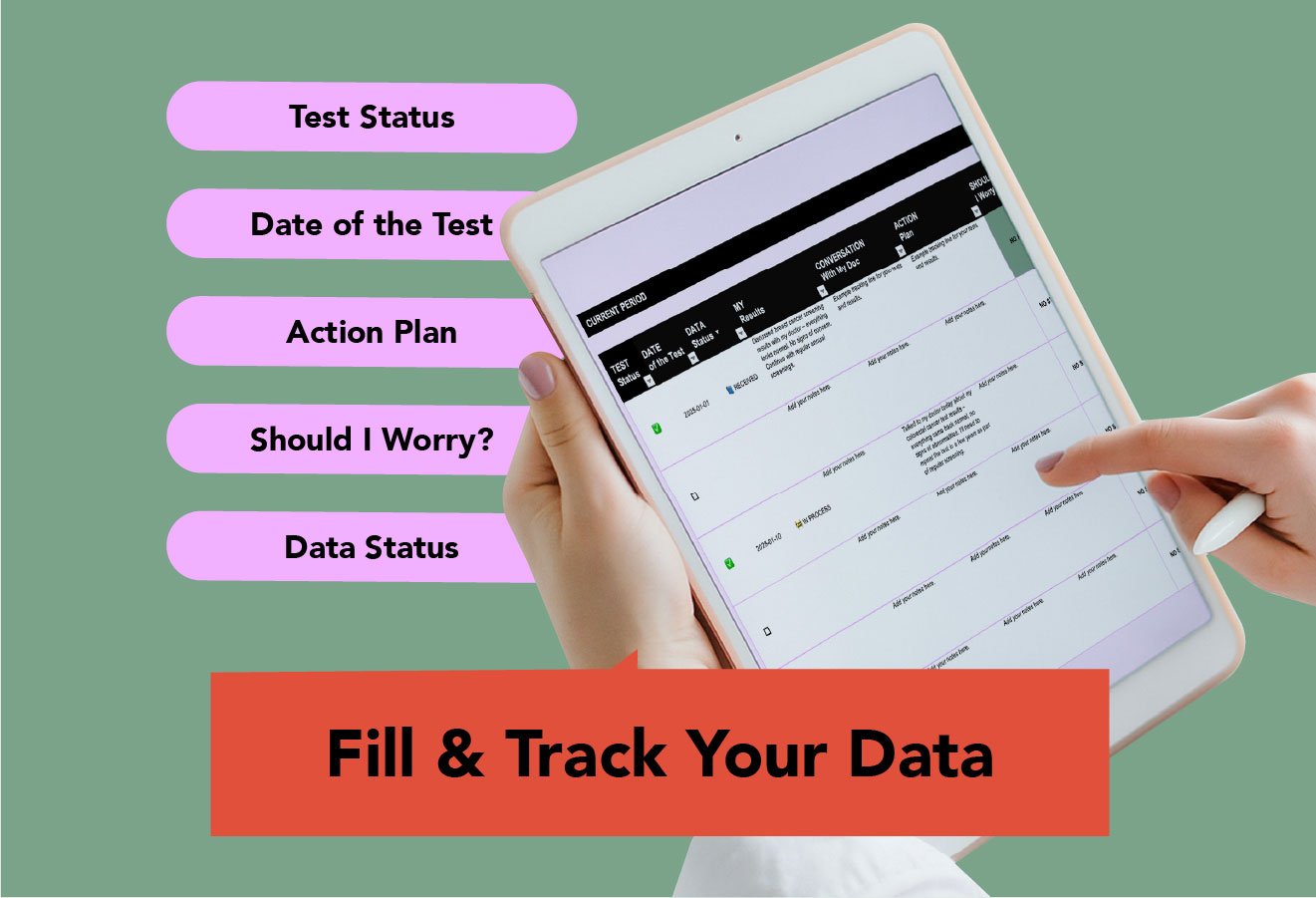
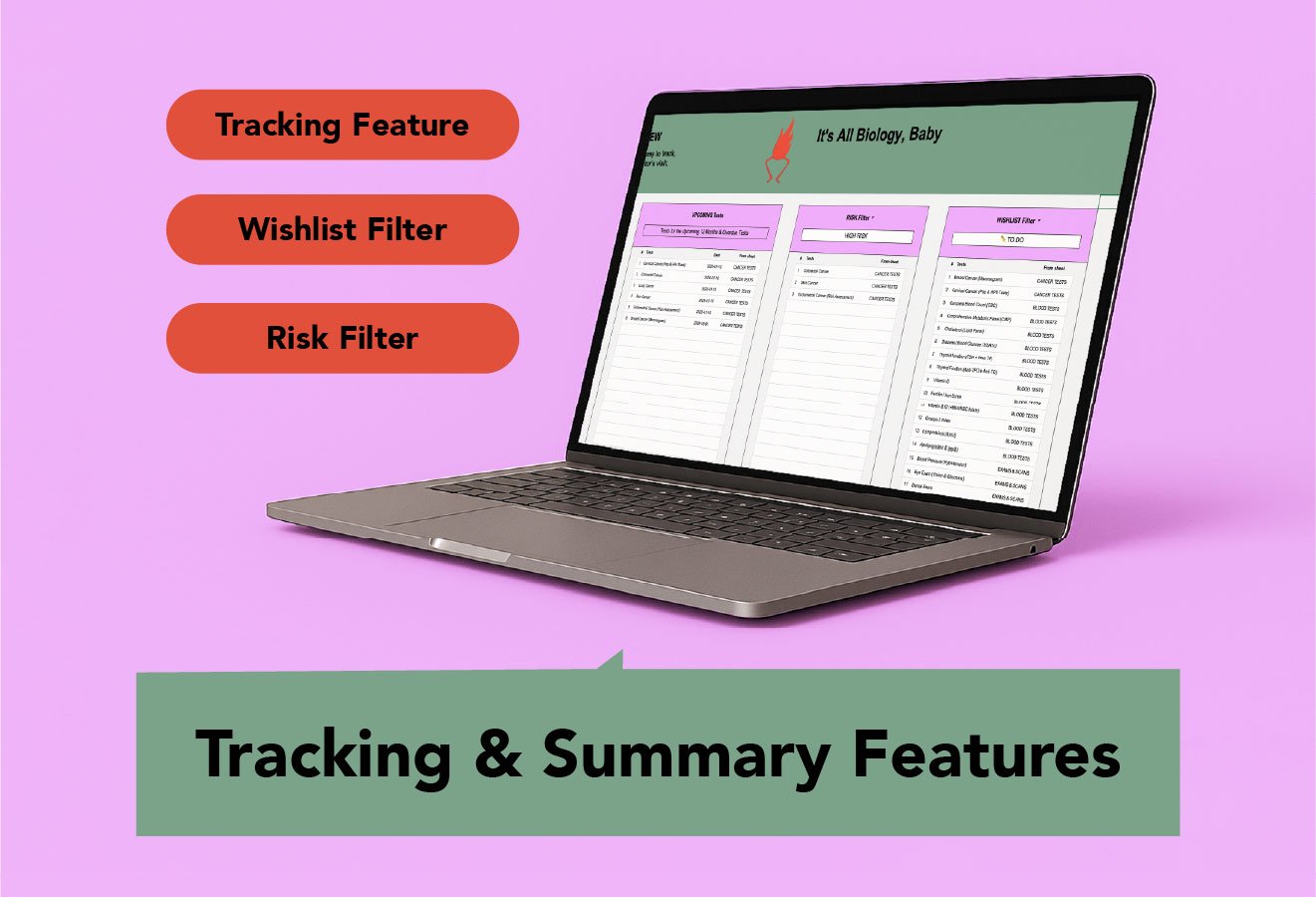
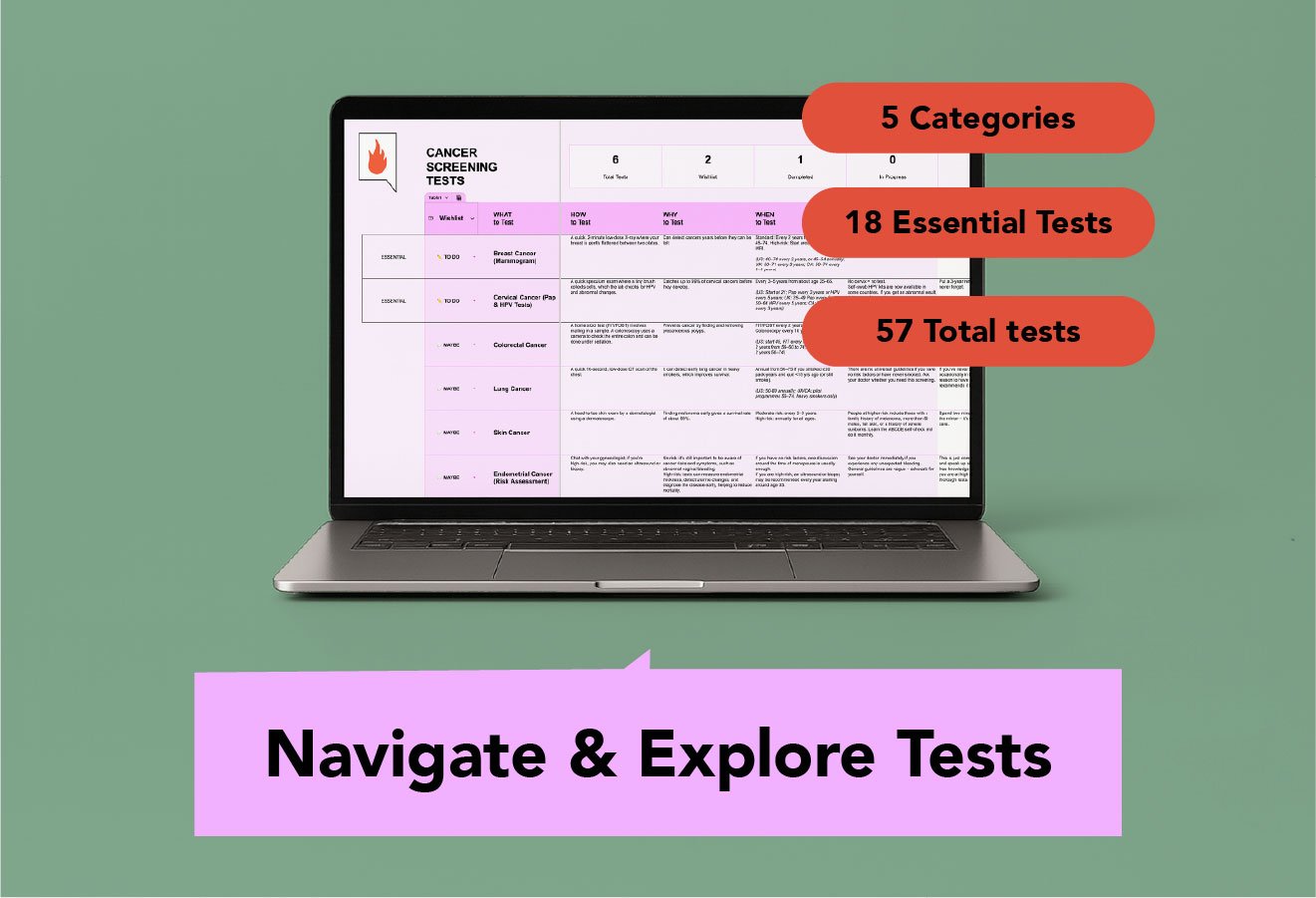
A CLEAR, SCIENCE-BASED LIST of the most important medical tests recommended for women 40+.
EXPLANATIONS of why each test matters during perimenopause, menopause, and postmenopause.
A PRACTICAL WORKSHEET you can fill in with your own results, making it easy to track trends over time.
GUIDANCE on when to ask for these tests and how often to repeat them.
I discovered my ferritin was extremely low almost by accident. Standard blood tests said everything looked “normal,” yet I felt persistently tired and my nails had become brittle and thin. I asked my doctor for a ferritin test (something not included in the usual panel) and it turned out my iron stores were severely depleted.
Oral supplements barely helped, so I ended up needing IV iron infusions every six months for two years. Each infusion brought an immediate, dramatic boost in energy. That experience showed me how easy it is to miss critical pieces unless you know what to ask for.
Most national screening recommendations (like the latest from NICE, EU health boards, and menopause societies) suggest testing only if you’re at “risk” or have symptoms. Sensible on paper, but not always ideal in practice. These guidelines aim to protect healthcare budgets, not necessarily optimize your long-term health.
“Most national screening recommendations suggest testing only if you’re at “risk” or have symptoms. Sensible on paper, but not always ideal in practice.”
Guidelines are written for populations. You live in one body with its own family history, vulnerabilities, and goals. That’s why this Tracker goes beyond the bare minimum and gives you the tools to personalize your testing strategy based on what’s actually happening in your life and body. If your doctor says, “we don’t usually test that,” you’ll know how to respond (politely — but firmly).


Perimenopause and postmenopause can come with vague, confusing symptoms. A little fatigue here, a little hair shedding there… and before you know it, you’re dealing with undiagnosed thyroid issues, iron depletion, or creeping insulin resistance. It doesn’t have to be that way. Some tests may save your life. Others may simply explain why your energy’s off.
Just keep in mind: this list covers the essential screenings for generally healthy women going through the menopause transition. It’s not a substitute for specialist testing. If something unusual shows up, or if you already have a diagnosed condition, your doctor will guide you through additional, more targeted tests. This guide is your starting point to understand testing possibilities and options you have to empower you to talk to your doctor, it is not medical advice.
I haven’t included “normal” reference ranges in the tool, because each laboratory sets its own. Even when two labs use the same units – say, IU/L or nmol/L- the cut-offs for what they call “normal” can still differ, sometimes within the same city. Always compare your results against the reference interval printed on your specific lab report.
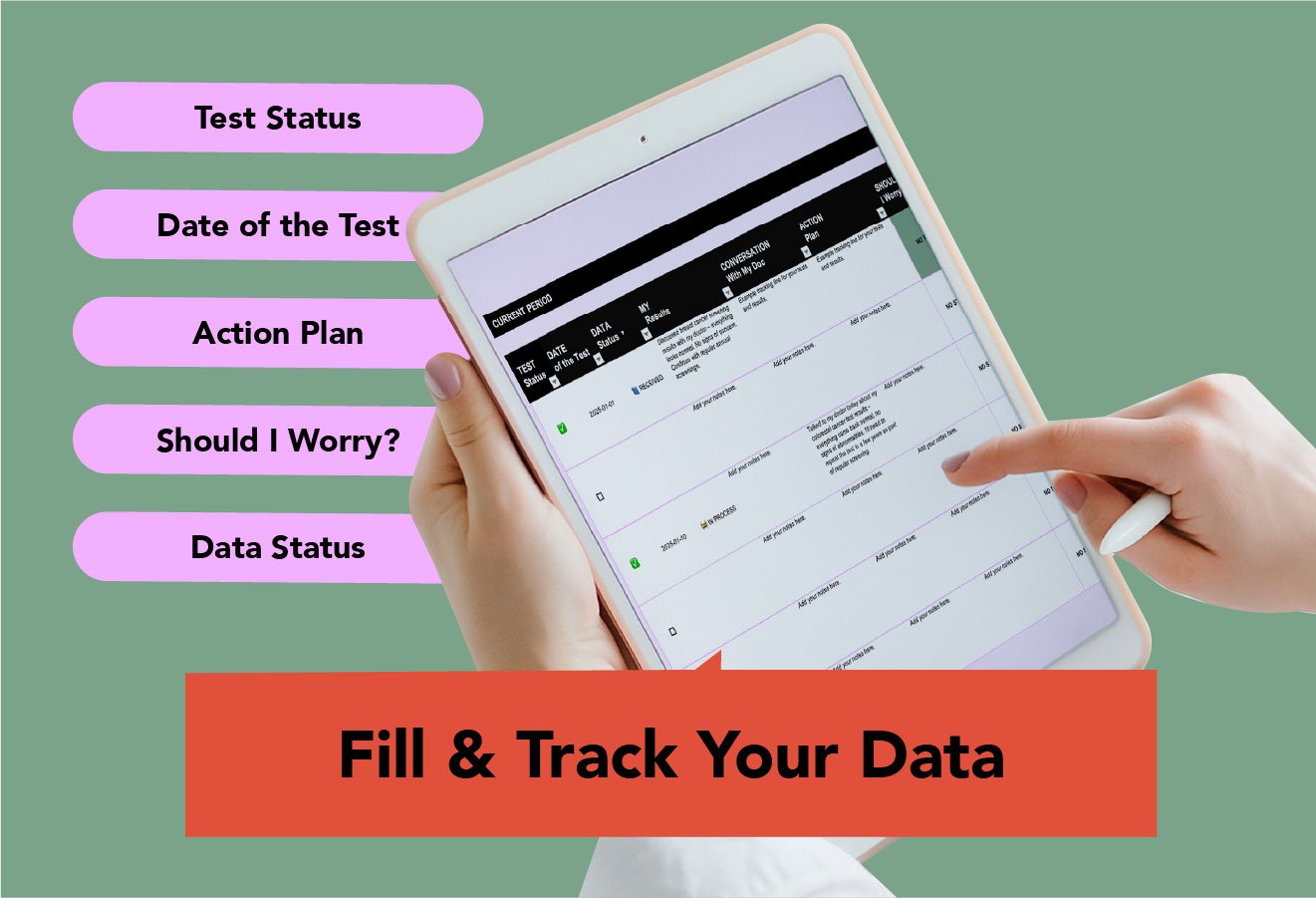
Get your Interactive Medical Tests Tracker:
Curious what your omega-3 level is or your epigenetic age? I’ve included a few “not necessary, but fun to know” tests that can give you insight, motivation, or just a good nudge toward healthier habits. Because knowledge is power and sometimes, a little curiosity is the spark that gets you moving.
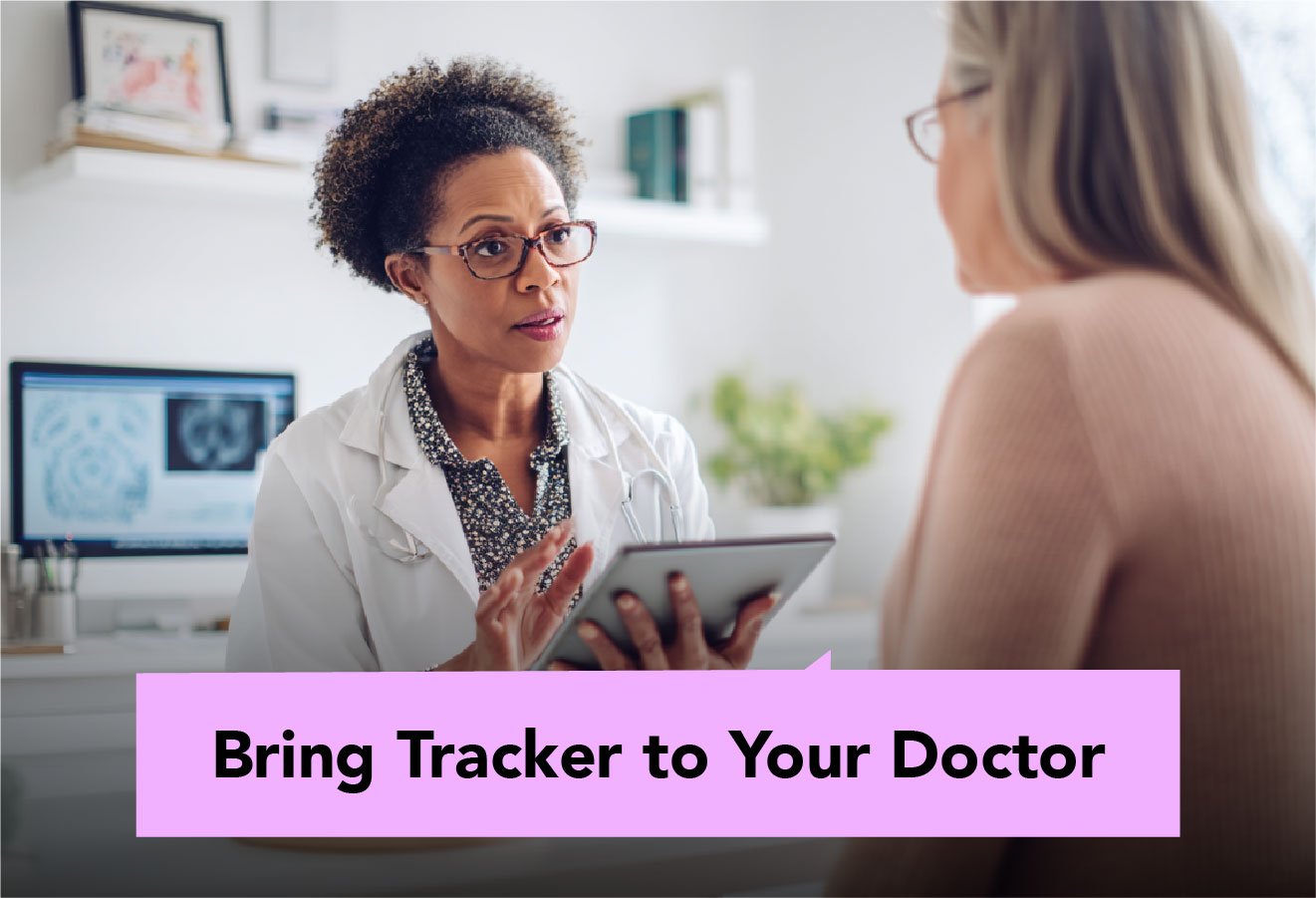
Use it as your reference before your next doctor’s visit, your annual check-up, or even just a quiet moment with your lab results and a cup of coffee. It’s designed to help you ask the right questions, spot the red flags early, and feel more in control of your health, not overwhelmed by it.
Let’s make sure you’re tracking what really matters.
Prevention is everything. Yes, guidelines exist to give us a solid starting point, but they’re built around statistical averages and none of us wants to be that unfortunate outlier who misses an early warning sign.
In my opinion, it’s always better to lean on the side of caution. If that means talking to your doctor about getting tested a little earlier or more frequently, go for it.
The entire purpose of screening is to catch small issues before they become big ones, and at this stage of life, our health can shift in subtle ways that slip under the radar.
Why risk it? Investing in a few extra tests or follow-ups can offer peace of mind and potentially save you from heartbreak down the line.
Dr. Jūra Lašas
1.
U.S. Preventive Services. A & B recommendations. https://kntn.ly/0853d410
2.
Medline Plus. Health screenings for women ages 40 to 64. https://kntn.ly/30b4e28f
3.
NHS. NHS screening. https://kntn.ly/02298b2c
4.
Lambrinoudaki, Irene et al. Menopause, wellbeing and health: A care pathway from the European Menopause and Andropause Society https://doi.org/10.1016/j.maturitas.2022.04.008

Healthy Body & Mind
Brain & Mind Wellness

Treatments & Supplements

Understanding Menopause
Scientific Research

Understanding Menopause

Lifestyle & Self-Care

Scientific Research

Eat to Thrive

Scientific Research
Treatments & Supplements

Understanding Menopause

Understanding Menopause

Understanding Menopause

Lifestyle & Self-Care

We use cookies and similar technologies to ensure the proper functioning of our website, personalize content, provide social media features, and analyze traffic. By clicking “I Agree”, you consent to the use of these technologies.
No results