08 January 2026
Science Digest: Beyond “Brain Fog”

Reading time 9 min
Reading time 9 min
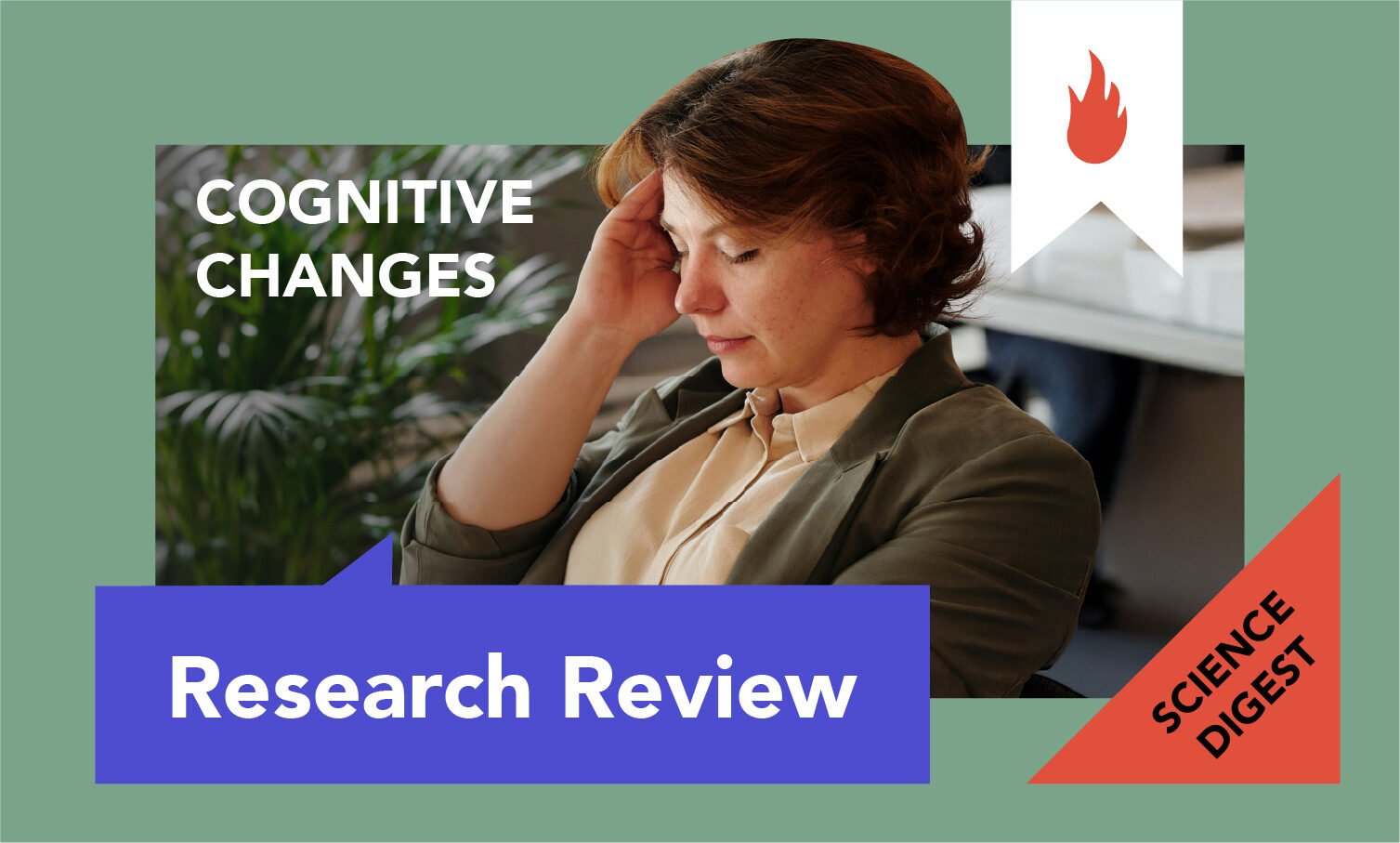
The paper “Cognitive Problems in Perimenopause: A Review of Recent Evidence” was published in October 2023 in Current Psychiatry Reports, a Q1 psychiatry journal. I chose it because cognition in perimenopause is a constant topic on social media. The paper goes well beyond vague “brain fog.”
It looks at evidence on specific cognitive functions affected during the transition, including verbal learning and verbal memory, processing speed, attention, working memory, and executive functions like planning and task management.
The authors, led by Dr. Christina Metcalf from the University of Colorado, systematically analyzed recent research to answer a question that matters deeply to millions of women: Is the mental cloudiness real, and what can we do about it?
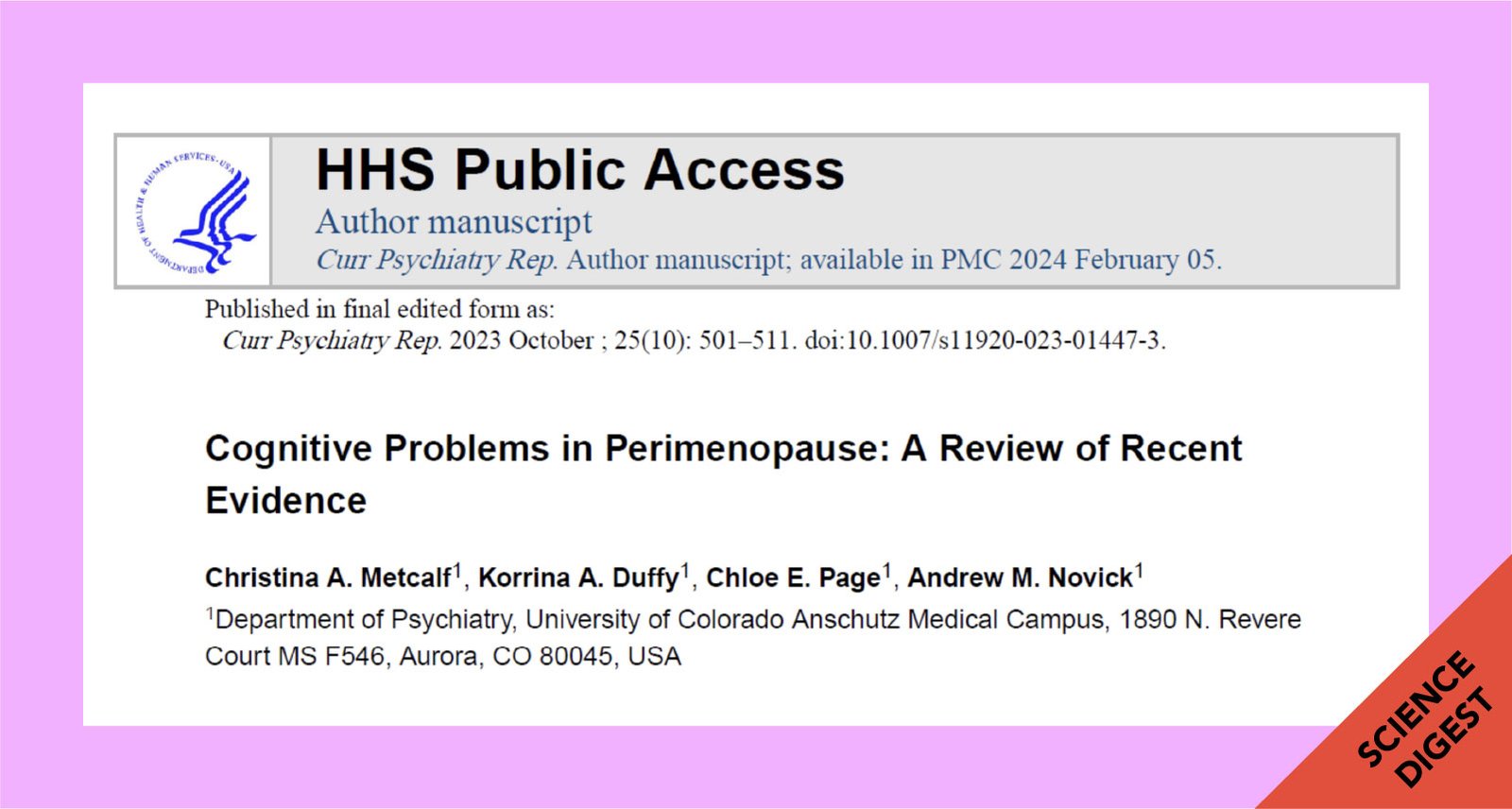
This isn’t a single study but a systematic review that examined recent research on cognitive changes during perimenopause. The authors reviewed findings from multiple longitudinal studies and cross-sectional studies spanning several countries and populations.
They defined perimenopause as the menopause transition from early changes in cycle length through the first year after the final menstrual period. The review examined which cognitive functions are most affected, what factors make some women more vulnerable than others, what’s happening in the brain during this time, and what women can do to address these concerns.
Most women report memory and concentration problems during perimenopause. The number of women affected differs from study to study but the message is clear: cognitive complaints are common, not imagined.
Women struggle more with learning new information and recalling what they’ve learned, independent of age and other factors. Recent research adds that processing speed, attention, and working memory may also decline during perimenopause.
Some women show weaknesses in specific areas while others demonstrate strengths. Not all women experience the same pattern of decline, which helps explain why some women breeze through perimenopause mentally sharp while others struggle significantly.
The strongest cognitive changes appear in the final year of perimenopause and the first year after the final menstrual period. Studies comparing perimenopause to postmenopause suggest that cognitive function may be comparable or even worse during perimenopause than after it.
Depression, sleep problems, and vasomotor symptoms (hot flashes and night sweats) are associated with worse cognitive performance during perimenopause. These relationships may affect each other: cognitive difficulties can worsen mood and sleep, while poor sleep and depression can worsen cognition.
Neuroimaging studies show changes in brain activity during perimenopause that correlate with cognitive performance, particularly in brain areas involved in working memory and processing visual information.
Current guidelines from the North American Menopause Society do not support hormone therapy for cognitive complaints at any age. Small studies testing hormonal interventions in perimenopausal women with depression or schizophrenia showed mixed results.
Animal research suggests that combinations of estradiol and certain progestins may help working memory, but this hasn’t been tested in healthy perimenopausal women.
This review highlights several critical research limitations. Studies do not use consistent definitions of perimenopause, making comparisons difficult. Most research focuses on white, educated, middle-class women, leaving us with limited understanding of how perimenopause affects cognition in all women.
“Many studies do not take into account differences in lifestyle (diet, exercise, smoking), lifetime hormone exposure, mental health history, or medication use; all of which could affect cognitive function.”
Most importantly, intervention studies are notably absent. Most studies on treatments have looked at women in postmenopause, not during the transition. The few studies that have tested treatments during perimenopause are too small to give reliable answers and mostly focus on women with mental health conditions, not healthy women dealing with memory and concentration problems.
We also don’t know how long cognitive symptoms last because researchers haven’t followed women from the start of perimenopause through to several years after menopause ends.

This review confirms what many women already know from lived experience: cognitive changes during perimenopause are real and significant. Perimenopause is a distinct neurological transition, not just a collection of annoying symptoms.
The research aligns with broader understanding that the female brain is not simply a smaller version of the male brain. Hormones like estrogen play crucial roles in brain function, particularly in regions involved in memory, learning, and attention. When estrogen levels fluctuate dramatically during perimenopause, these brain functions can be disrupted.
What’s most surprising is how little we know about treating cognitive problems during perimenopause. There’s a huge gap in research. We simply don’t have large, well-designed studies testing what actually works. We deserve real, proven treatments, not just being told “this is normal.”
The research validates your experiences as real neurological changes, not character flaws or signs of early dementia. This matters because dismissing or minimizing cognitive complaints can delay appropriate care.
While we await better treatment research, several practical steps may help:
This review paper makes me both hopeful and frustrated. We’re finally moving past the dismissive “it’s all in your head” narrative (well, technically it is all in your head, but in a legitimate neurological way). I’m frustrated because the treatment landscape is so barren. We have extensive research on cognitive changes but almost nothing on what actually helps.
Until we have better evidence, what I want you to know is this: your cognitive struggles during perimenopause are real. They matter. They’re not signs of weakness or early dementia. For most women, they’re temporary. Optimize your sleep, treat your depression, manage your hot flashes, engage in brain-healthy behaviors. Be kind to yourself during this transition.
Dr. Jūra Lašas
1.
Metcalf, C. et al. Cognitive Problems in Perimenopause: A Review of Recent Evidence. (2023) https://doi.org/10.1007/s11920-023-01447-3

Eat to Thrive

Healthy Body & Mind
Brain & Mind Wellness

Treatments & Supplements

Eat to Thrive

Understanding Menopause
Scientific Research

Understanding Menopause

Eat to Thrive

Lifestyle & Self-Care
Scientific Research

Exercise & Nutrition

Eat to Thrive

Symptoms Explained

Eat to Thrive

Eat to Thrive

Scientific Research

Treatments & Supplements

We use cookies and similar technologies to ensure the proper functioning of our website, personalize content, provide social media features, and analyze traffic. By clicking “I Agree”, you consent to the use of these technologies.
No results