25 November 2025
Recipe Lab: Protein & Fiber Power Salad

Reading time 6 min
Reading time 6 min
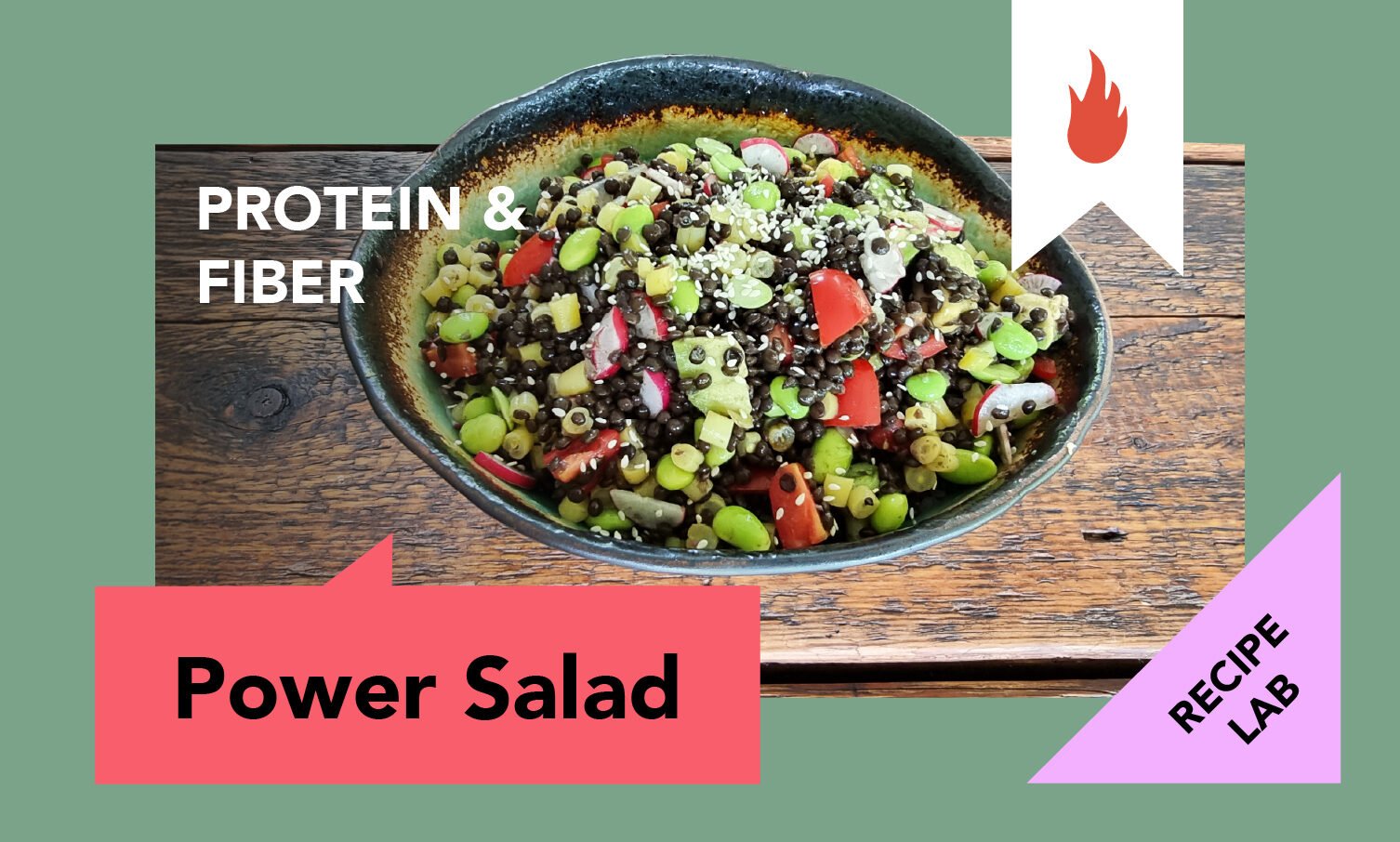
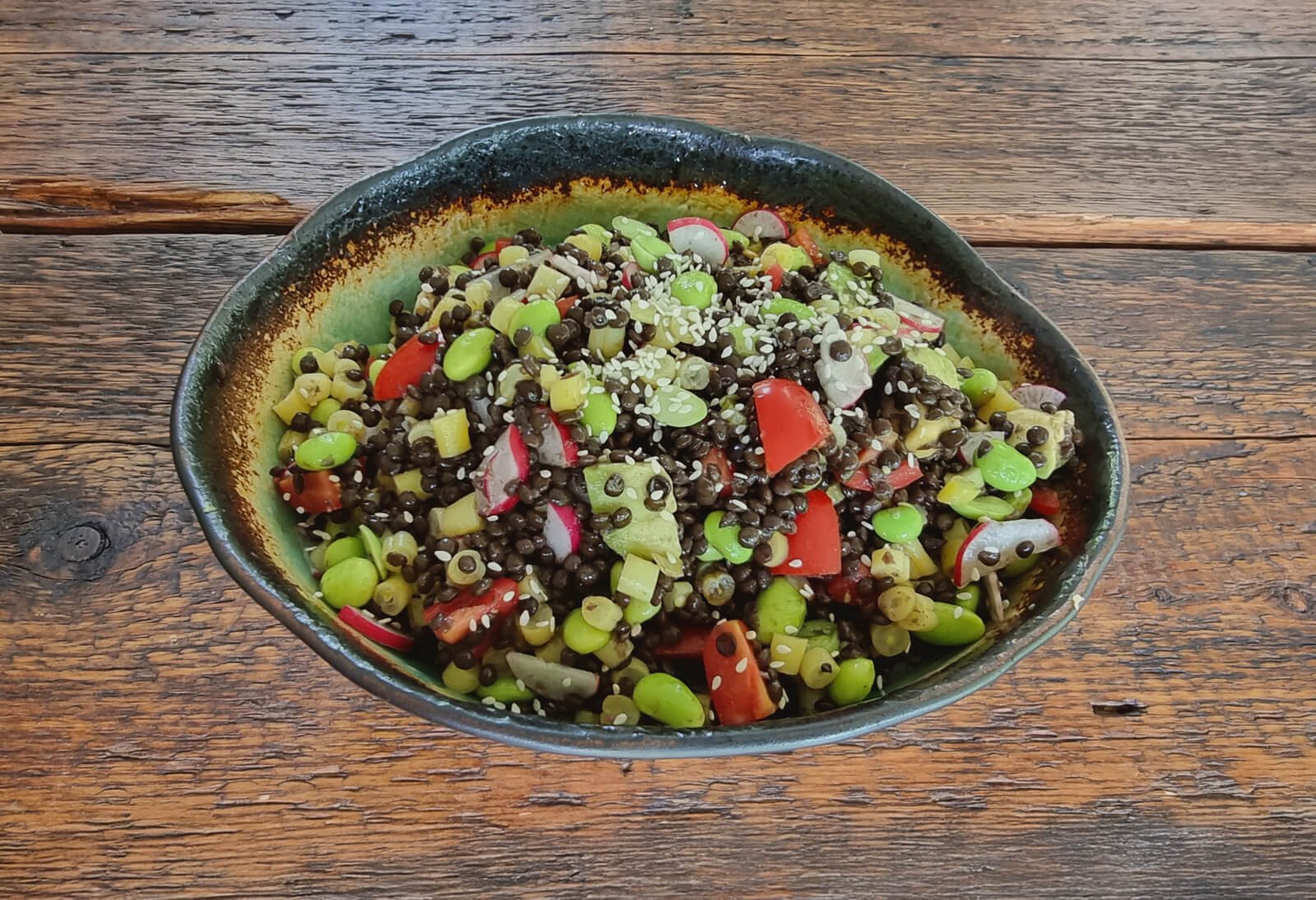
This high protein and fiber salad combines black lentils, edamame, avocado, and crunchy vegetables to deliver a nutrient-dense, fiber-packed, and protein-rich meal. It’s light yet satisfying, perfect for lunch or as a base for dinner. For women in midlife, it works beautifully as a balanced everyday meal, and when paired with chicken or tofu, it becomes an excellent post-workout recovery option.
According to science, this salad supports your body in two critical ways:


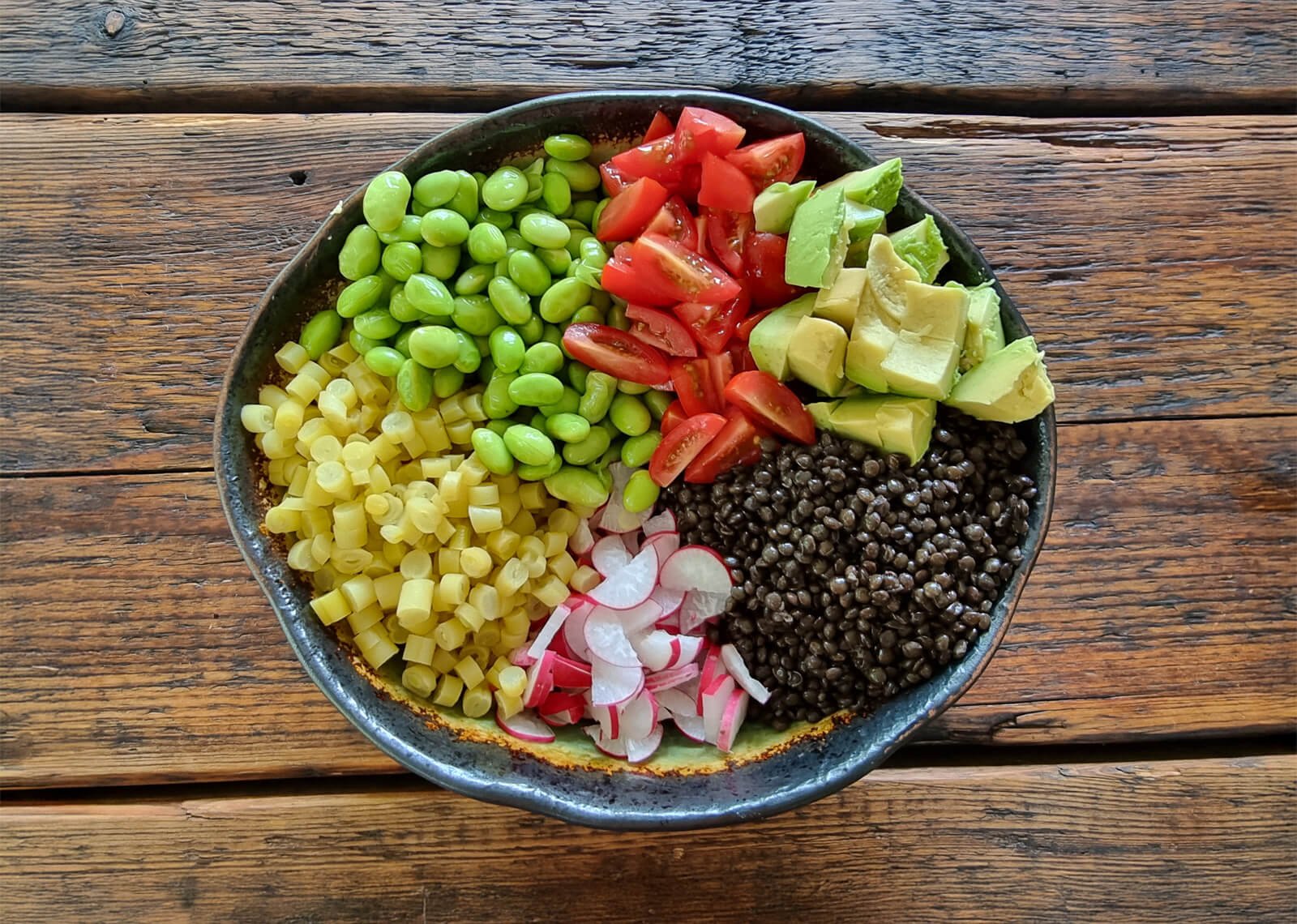
For 4 servings.
400 g prepared black lentils
100 g fresh radishes, sliced
200 g prepared waxed or green beans
200 g prepared edamame beans
100 g cherry tomatoes, halved
1 large avocado, cubed
1 Tbsp lemon juice
2 Tbsp extra virgin olive oil
1 Tbsp toasted sesame seeds
Salt and pepper to taste
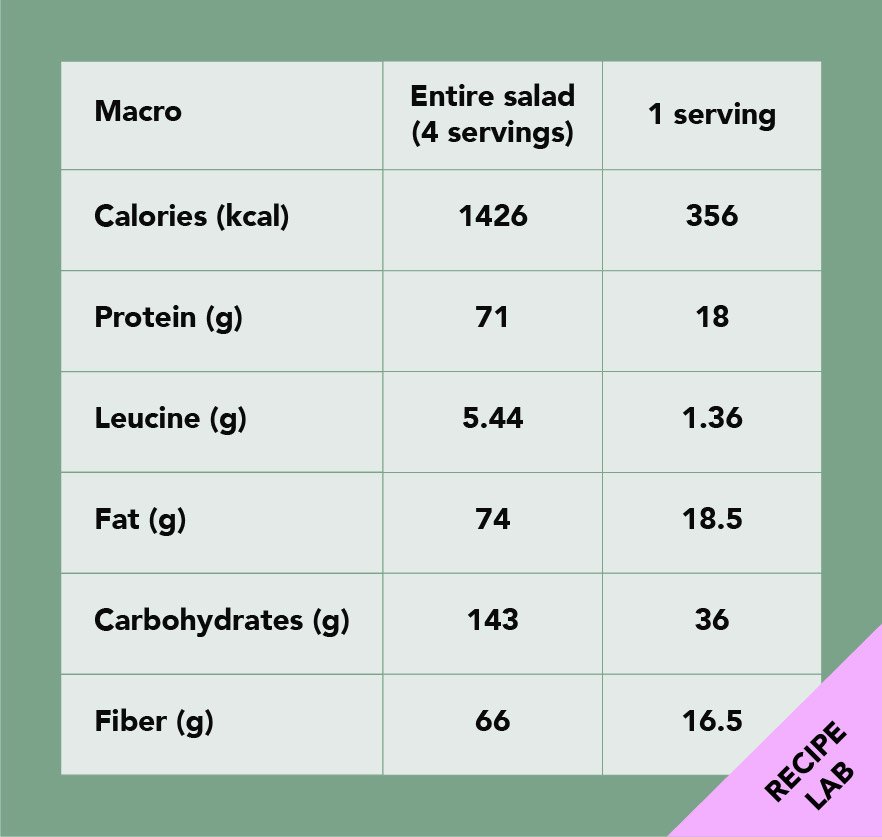
Note: Macros, micros and calorie values are approximate, based on standard databases. Actual values will vary with your ingredients and preparation.
The natural micronutrient standouts are calcium (~89 mg per serving, 9% of the 1,000 mg daily need), magnesium (~105 mg per serving, about 25% of the 320 mg daily need), and isoflavones (~9 mg per serving, about 8–18% of the 50–120 mg/day range shown in clinical trials to have benefits3).
This is a powerhouse salad: high in fiber, full of healthy fats, and rich in plant-based protein. For women in midlife, it works as both a refreshing light meal and a smart foundation to which you can add more protein when needed.
It’s a recipe that supports gut, heart, and muscle health all in one bowl.
Dr. Jūra Lašas
1.
Church, D. et al. Stimulation of muscle protein synthesis with low-dose amino acid composition in older individuals. (2024) https://doi.org/10.3389/fnut.2024.1360312
2.
Wei, B. et al. Dietary fiber intake and risk of metabolic syndrome: A meta-analysis of observational studies. (2017) https://doi.org/10.1016/j.clnu.2017.10.019
3.
Kang, I. et al. Effect of isoflavone supplementation on menopausal symptoms: a systematic review and meta-analysis of randomized controlled trials. (2022) https://doi.org/10.4162/nrp.2022.16.S1.S147
Eat to Thrive

Healthy Body & Mind
Brain & Mind Wellness

Treatments & Supplements
Eat to Thrive

Understanding Menopause
Scientific Research

Understanding Menopause

Eat to Thrive

Lifestyle & Self-Care
Scientific Research

Exercise & Nutrition
Eat to Thrive
Symptoms Explained
Eat to Thrive
Eat to Thrive

Scientific Research
Treatments & Supplements

We use cookies and similar technologies to ensure the proper functioning of our website, personalize content, provide social media features, and analyze traffic. By clicking “I Agree”, you consent to the use of these technologies.
No results