25 November 2025
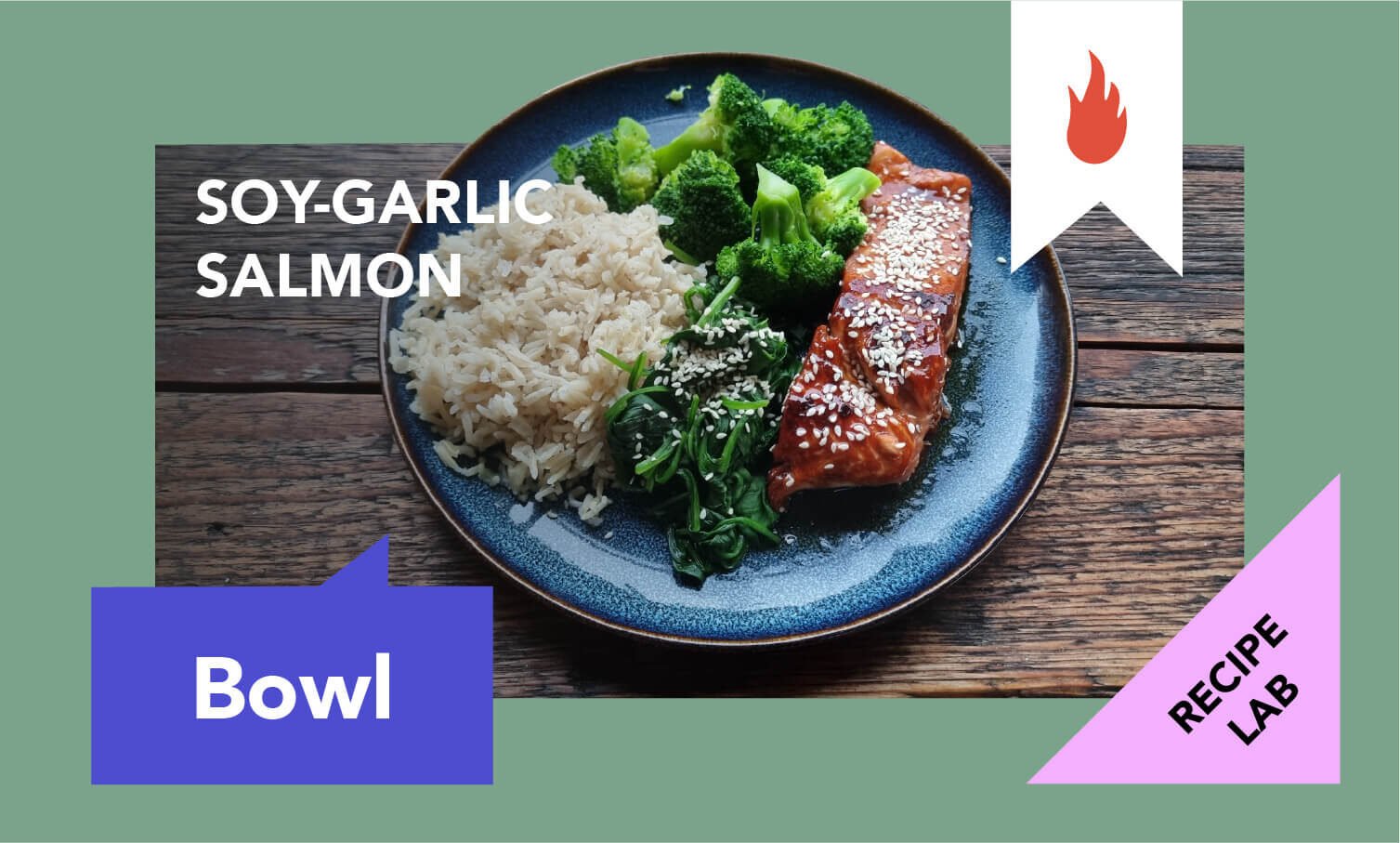
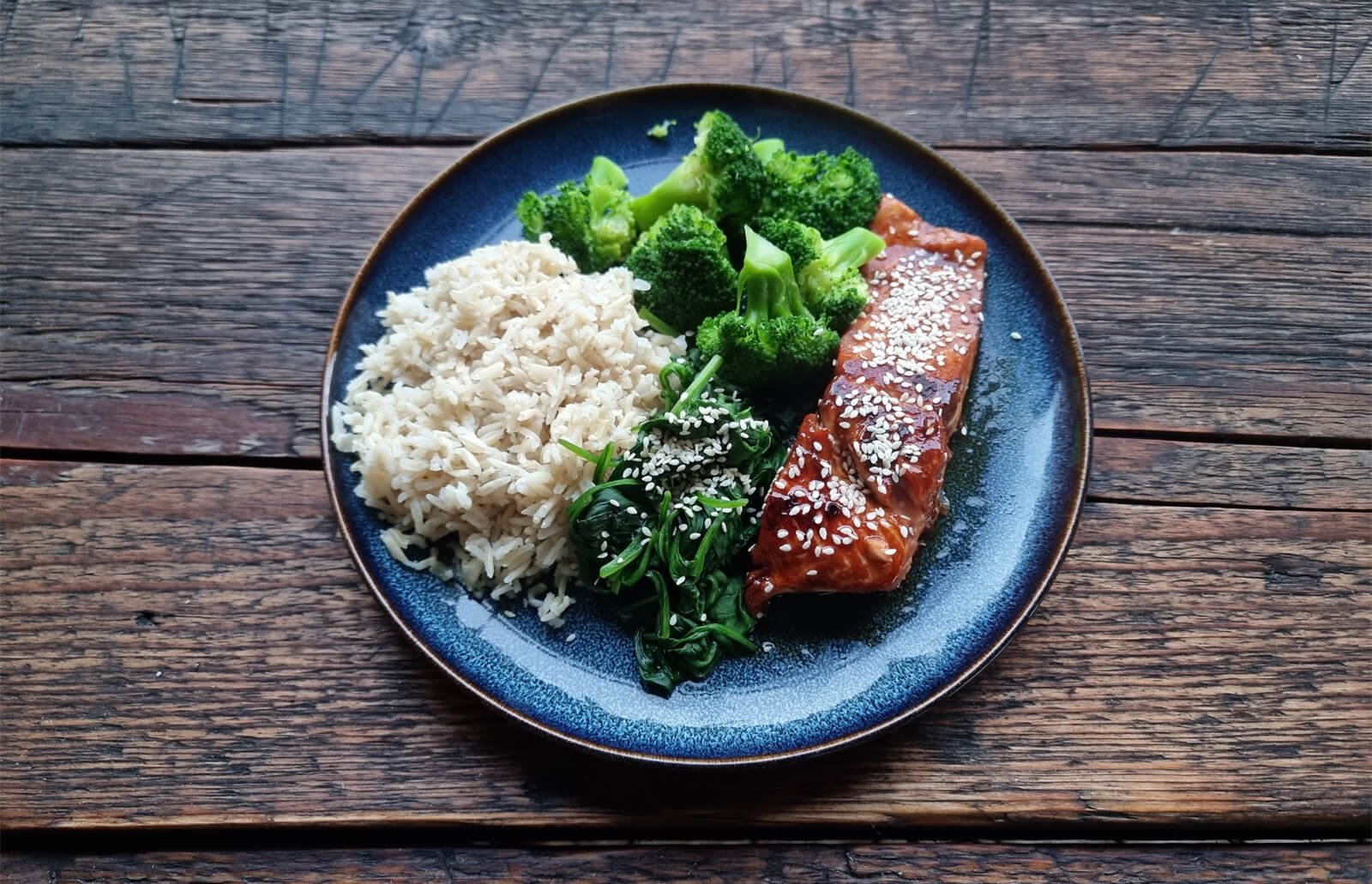
Recipe Lab: Soy-Garlic Salmon Bowl

Reading time 6 min
Reading time 6 min
This soy-garlic salmon bowl recipe provides a high-protein, fiber-rich dinner that supports muscle strength, cardiovascular health, and overall vitality. It’s ideal for midlife women who want nourishing meals that stabilize energy and maintain lean muscle mass through the menopause transition.
According to science, this recipe supports your body in three important ways:


For 4 servings.
600 g skinless salmon fillet, cut into 4 portions
15 ml (1 tbsp) olive oil for salmon
45 ml (3 tbsp) reduced-sodium soy sauce
15 ml (1 tbsp) mirin or honey
1 clove (3 g) garlic, crushed
200 g brown rice (dry, yields ~600 g cooked)
800 g broccoli (raw, steamed until bright green)
600 g spinach (raw, sautéed with 1 tsp olive oil, salt, sesame)
5 ml (1 tsp) olive oil for spinach
4 tsp sesame seeds (1 tsp per serving)
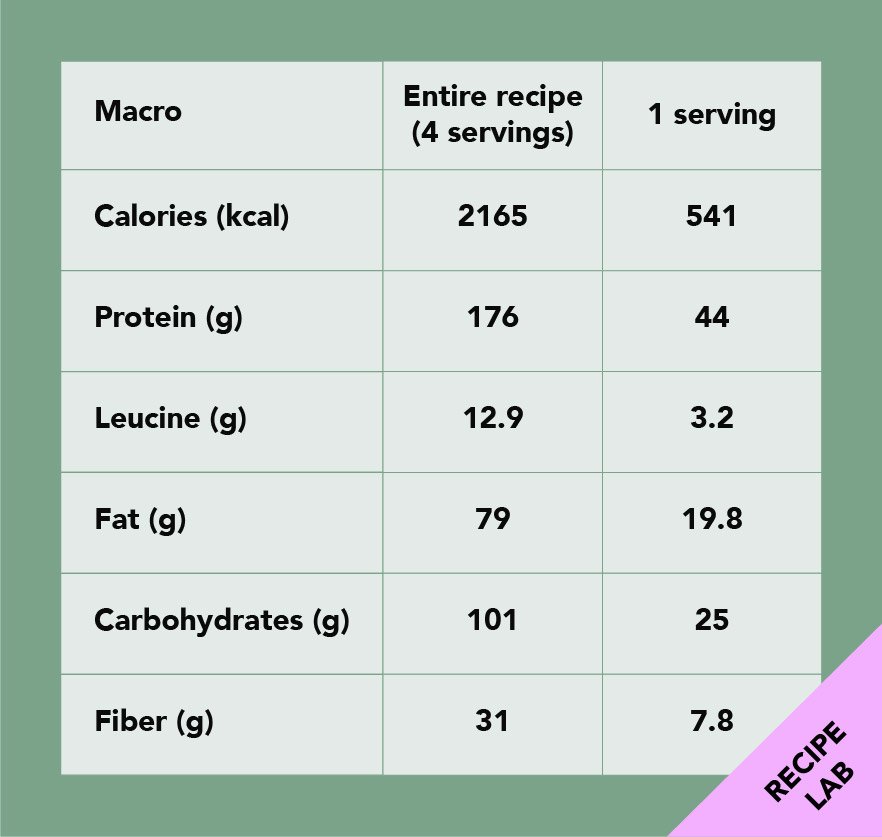
Note: Macros, micros and calorie values are approximate, based on standard databases. Actual values will vary with your ingredients and preparation.
The natural micronutrient standouts are iron (~4 mg per serving, ~22% of the 18 mg daily need), vitamin B12 (~1.8 µg per serving, ~75% of the 2.4 µg daily need), and calcium (~190 mg per serving, ~19% of the 1,000 mg daily need).
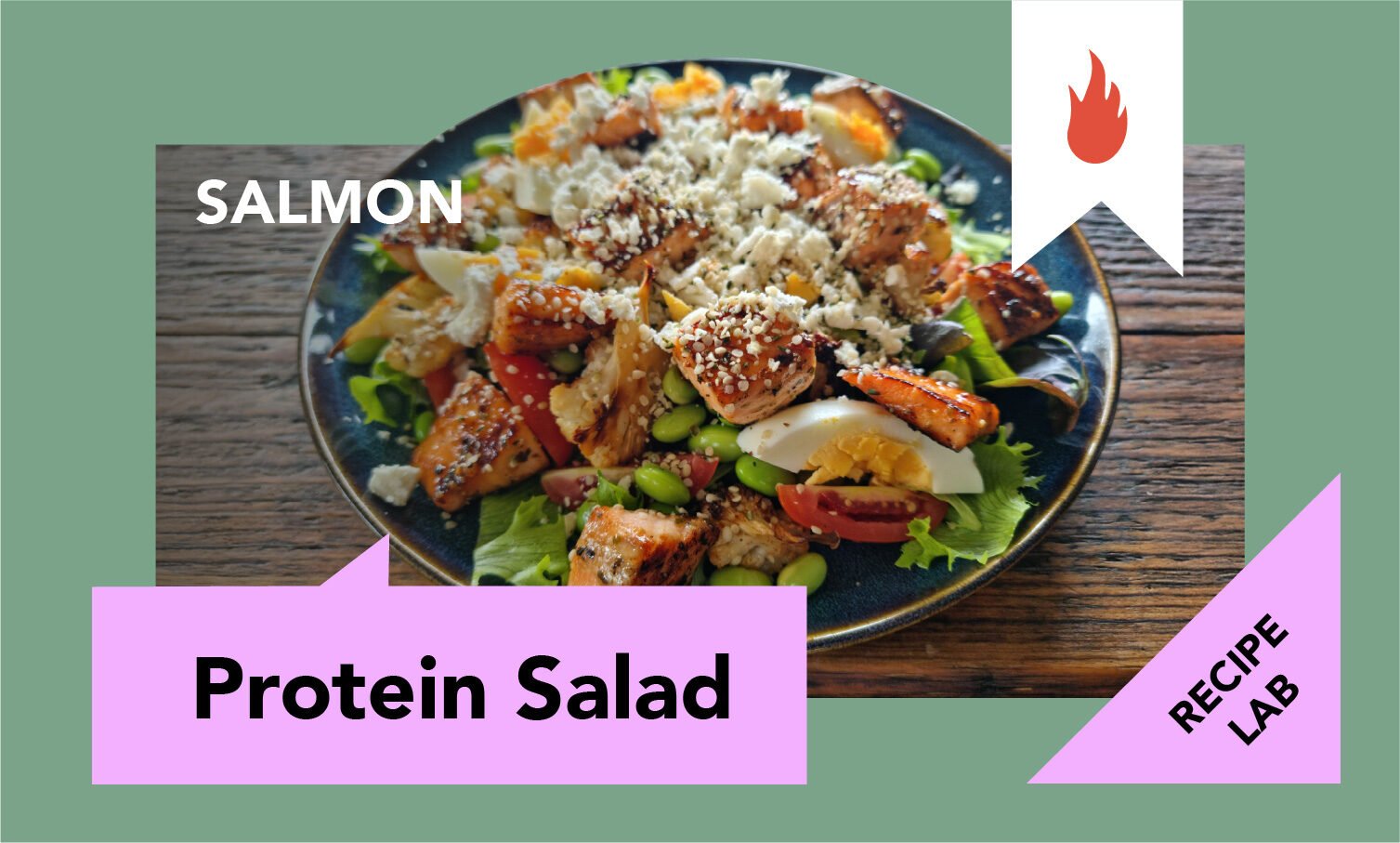
This recipe is one of those quiet powerhouses – simple ingredients that do a lot of work for your body. The salmon gives you high-quality protein and omega-3 fats to protect your heart and keep inflammation in check, while the broccoli and spinach layer in fiber, iron, and magnesium. Together, they form the kind of meal that keeps your energy steady instead of spiking and crashing.
What I like most is how flexible it is. You can make it in under 30 minutes, swap rice for quinoa, or double the greens for an extra fiber kick. It feels comforting, yet it’s exactly the kind of dinner that helps your body adapt, repair, and stay strong through the menopause transition.
Dr. Jūra Lašas
1.
Yang, X. et al. Characterization of insoluble dietary fiber from three food sources and their potential hypoglycemic and hypolipidemic effects. (2021) https://doi.org/10.1039/D1FO00521A
2.
Ambati, R. et al. Astaxanthin: Sources, Extraction, Stability, Biological Activities and Its Commercial Applications – A Review. (2014) https://doi.org/10.3390/md12010128
3.
Kikuchi, M. et al. Sulforaphane-rich broccoli sprout extract improves hepatic abnormalities in male subjects. (2015) https://doi.org/10.3748/wjg.v21.i43.12457
4.
Jonvik, K. et al. Nitrate-Rich Vegetables Increase Plasma Nitrate and Nitrite Concentrations and Lower Blood Pressure in Healthy Adults. (2016) https://doi.org/10.3945/jn.116.229807
Eat to Thrive

Healthy Body & Mind

Brain & Mind Wellness

Treatments & Supplements
Eat to Thrive

Understanding Menopause
Scientific Research

Understanding Menopause

Eat to Thrive

Lifestyle & Self-Care

Scientific Research

Exercise & Nutrition
Eat to Thrive

Symptoms Explained
Eat to Thrive
Eat to Thrive

Scientific Research

Treatments & Supplements

We use cookies and similar technologies to ensure the proper functioning of our website, personalize content, provide social media features, and analyze traffic. By clicking “I Agree”, you consent to the use of these technologies.
No results