
Hidden Talent Loss

Your most experienced women are stepping back. It usually gets recorded as burnout.

Maybe the diagnosis isn’t burnout?

For the past decade organizations have invested heavily in burnout prevention, engagement and retention.

One risk has stayed almost invisible.

What happens when one of your most capable people starts avoiding leadership and slowly pulls back from her professional life?

It gets explained as low motivation, tiredness, or burnout.

The science points somewhere else – to biological changes happening in the brain during perimenopause.

It isn’t a motivation problem. It isn’t a competence problem.

It is biology.

women-struggle-at-work-menopause-workplace-aspect-ratio-1317-792

What leaves the building

Perimenopause isn’t a question of a woman’s weakness. It’s a question of whether you keep your most valuable people.

Women over 40 usually hold

the most competence, the deepest professional knowledge and the most leadership experience you have.

And this is exactly the career stage

where organizations start losing not the employee, but her potential. Initiative drops. Leadership roles get declined. Promotions stop being pursued.

There’s a reason nobody raises this internally

A woman who goes to her manager or to HR and describes what she’s experiencing is taking a real risk with a reputation she spent twenty years building. Because this transition is so rarely discussed in public, she usually doesn’t have the vocabulary to explain it.

She can’t easily say “my professional ability is intact, the conditions my brain is working under have temporarily changed”. Getting that wrong has consequences. So most women say nothing.

That means the first move can’t come from her. It has to come from the organization.
Three ways to start


1. Recalibration for your team

€1,500 for up to 20 participants

Understand the brain changes and protect confidence at work.

Recalibration is our three-week program: a live hour on what changes in the brain in midlife with a Q&A prepared around your organization, a detailed guide, and three weeks of practice in a private group with direct access to Dr. Jura Lasas.

Above 20 we run it as two groups – €2,800.

BOOK A GROUP

2. Leadership and HR session

Price on request · Includes option 1

Don’t mistake a brain change for a performance problem.

A live session for executives and HR leaders covering three things: how this shows up in behavior at work, what’s actually happening in the brain, and what the organization can do about it.

A woman who understands her own biology solves half the problem. The other half sits with the people who manage her, because a manager who reads a temporary change as lost commitment can end a career without ever intending to.

TALK TO US ABOUT TRAINING LEADERS

3. Custom program for your organization

By partnership · Includes options 1 and 2

Measure what changes. Improve what matters.

A session changes what people know. It doesn’t change what the organization tracks, or what happens next year when new managers arrive. We’re building this with a small number of partner organizations – likely a baseline questionnaire, tools for HR to follow change over time, e-learning for managers at scale, and pulse surveys that show whether anything is moving.

We’re building this now, with the first partners, and what we build gets shaped around what those organizations actually need. If you’d rather start with something already running, take option one or two.

START A CONVERSATION

Tell us where you’d like to start

Choose where you’d like to start and we’ll come back with what it would take.


For Organisations - First Form

Who Runs It

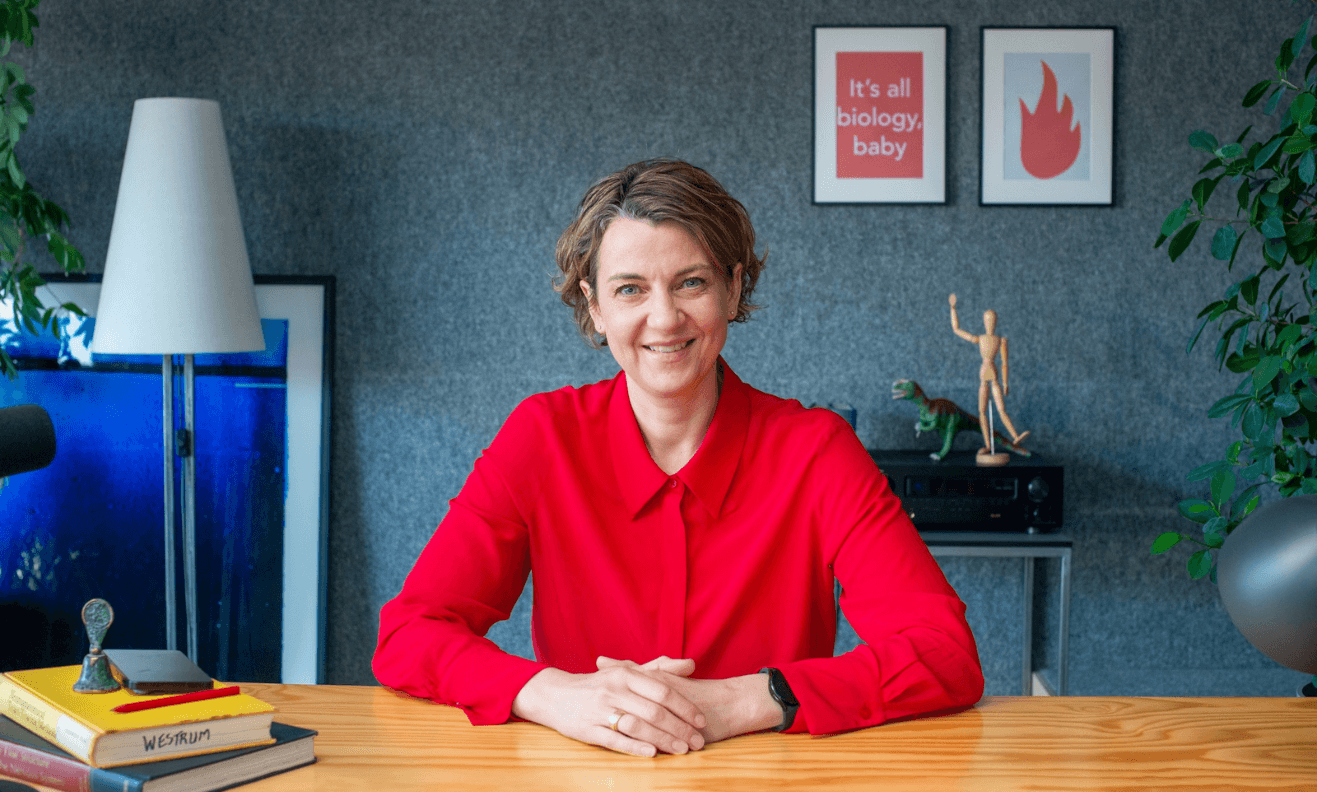
Dr. Jura Lasas – PhD in neurobiology (University of Washington, USA). Author of 13 peer-reviewed publications. More than fifteen years directing international clinical trials. Founder of Ticking Biology.

Somewhere between 40 and 55, slower word finding, memory lapses and slower decisions arrive at exactly the point in a career when expectations are highest. Most women say nothing. Some cut their hours, some turn down a promotion, some leave and almost none of them give the real reason.

“I’ve spent my career running international clinical trials and building clinical development strategy inside biotechnology companies. That means I can explain both the mechanism and what it looks like from the company’s side of the table. And I’m in this transition myself.”

neuroscientist-jura-lasas-brain-health-aspect-ratio-1317-792

No results