05 November 2025
Why Is a Neuroscientist Talking About the Menopause Transition? My Personal Story

Reading time 7 min.

Reading time 7 min.
I’m not a menopause doctor. I’m a neuroscientist who spent years designing and running basic science experiments and clinical trials: testing ideas, interpreting data, and watching how science becomes medicine. Especially as it relates to neuroscience and menopause.
How do neuroscience and menopause connect?
Estrogen shapes neural systems for sleep, mood, attention, and memory. During the menopausal transition, fluctuating and declining estrogen alter these circuits, producing brain fog, insomnia, and anxiety – measurable neurochemical changes that explain symptoms and guide evidence-based care.
One of my earliest lessons in research came during graduate work in neurobiology. We were planning an experiment, and my supervisor said, “Order only male mice, we don’t want hormones messing up the results.”
It wasn’t meant as a sexist comment; it was standard practice. Female hormones were seen as a variable to eliminate, not something worth understanding.
That moment symbolized a much bigger truth: for decades, women’s biology was treated as “too complicated” and “too messy” for science. As a result, most of what we know about drugs, metabolism, and brain function comes from research that didn’t include women.
Fast forward to my work in clinical trials. I saw the same pattern: women underrepresented in studies, perimenopause, menopause or postmenopause almost never discussed, and hormone related symptom clusters dismissed.
Yet the women I met: patients, colleagues, friends, were describing the same struggles with sleep, mood, and cognition that neurobiology could explain perfectly… if anyone looked.


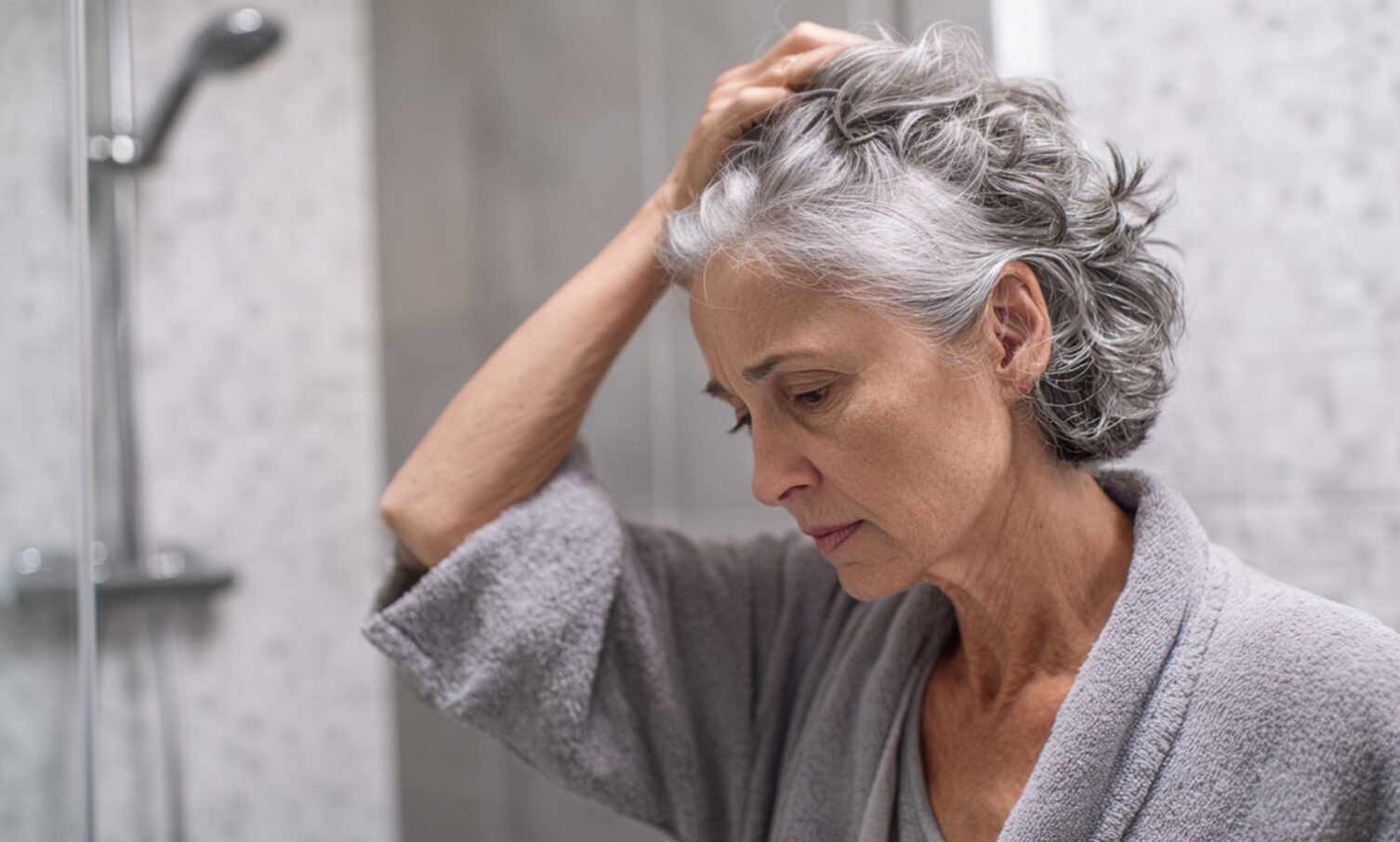
One day, as I struggled with my painful knees trying to get up from the bathroom floor, it clicked.
The same neurochemical systems I’d studied in the lab are deeply affected by estrogen. When those hormonal rhythms shift during perimenopause, so does the brain’s chemistry. It’s not just “mood swings” or “fog”; it’s measurable neurobiology changing in real time. The scientist in me appreciated the mechanism. The woman in me recognized my own personal story.
I’m going through the perimenopause transition myself, and like so many women, I’ve had to dig for real, evidence-based answers. I don’t like trusting random advice on social media or vague wellness claims. I want data that stands up to scrutiny, studies I can analyze and explain clearly. But finding solid science on women’s midlife biology isn’t easy. It shouldn’t take a PhD to understand your own hormones.
Menopause isn’t a niche topic. It’s one of the most complex biological transitions in human life, affecting the brain, heart, bones, metabolism, and immune system. It’s a living intersection of neuroscience, endocrinology, and clinical medicine, fields I’ve spent my career navigating.
So I built Ticking Biology to bridge that gap: to take what’s buried in journals and make it understandable, practical, and real. I write for women who want clarity, not platitudes. For those who want to know what’s happening in their bodies and why.
It wasn’t until 2016 that the U.S.A. National Institutes of Health (NIH) told scientists they had to study both males and females and take sex differences into account when doing experiments. Before that, neuroscience research mostly used male animals. For every study that used only females, there were about 5.5 studies using only males = around 85% male subjects and just 15% female1.
The result? Decades of “universal” science were based on data that didn’t truly represent half of humanity.
My goal isn’t to medicalize menopause or to sell “fixes.” It’s to give women back their own biology, explained clearly and without condescension.
Because hormones don’t “mess up” science.
They are science.
Dr. Jūra Lašas
1.
Bale, T. Sex matters. (2019) https://doi.org/10.1038/s41386-018-0239-x

Eat to Thrive
Healthy Body & Mind
Brain & Mind Wellness

Treatments & Supplements
Eat to Thrive

Understanding Menopause
Scientific Research

Understanding Menopause

Eat to Thrive

Lifestyle & Self-Care
Scientific Research

Exercise & Nutrition
Eat to Thrive
Symptoms Explained

Eat to Thrive
Eat to Thrive

Scientific Research
Treatments & Supplements

We use cookies and similar technologies to ensure the proper functioning of our website, personalize content, provide social media features, and analyze traffic. By clicking “I Agree”, you consent to the use of these technologies.
No results