18 June 2025
Healthy Aging During Menopause: Science-Backed Ways to Protect Your Brain and Nervous System

Reading time 16 min

Reading time 16 min
For many of us in midlife, the true test of healthy aging during menopause is a question the wellness industry rarely touches: Will my brain still work the way it used to? The true challenges of menopause are often cognitive: the lost word in a meeting, the dropped thread of a conversation, the relentless fatigue, and the uninvited anxiety.
There is, however, a significant reason for optimism. According to the 2024 Lancet Commission, 14 modifiable risk factors account for nearly 45% of dementia cases worldwide, and midlife is exactly when we can intervene. While the menopause transition is a vulnerable time, a decade of rapid scientific discovery has changed the answer to that central question: we now know what actions protect the brain.
Protecting menopause brain health has become one of the most important healthy aging goals for women after 40.


The brain is the organ most affected by the menopause transition and the one most overlooked in healthy aging conversations. Estrogen acts on the brain through receptors located throughout the hippocampus, prefrontal cortex, and other regions involved in memory, attention, and executive function. When estrogen levels drop, those regions lose a hormone that supported synaptic connections, mitochondrial energy production, and the integrity of small blood vessels in the brain². Recent in vivo brain imaging shows that estrogen receptor density actually rises across the menopause transition in estrogen-regulated brain regions, and higher receptor density predicts both poorer memory performance and the cognitive symptoms many women report.3 Your brain is not just losing estrogen, it is also reorganizing its receptor landscape in response.
Brain imaging has caught up with what women have been describing for decades about menopause brain health and cognitive aging. In the transition from perimenopause to postmenopause, the brain undergoes physical transformations: it changes how it uses glucose for energy, loses volume in gray and white matter, and develops markers often associated with early Alzheimer’s.4 These changes begin in the early forties, well before the final menstrual period, and are most concentrated in brain regions usually supported by estrogen. This confirms that the female brain follows a unique aging timeline – one governed by ovarian biology rather than just the passage of years.
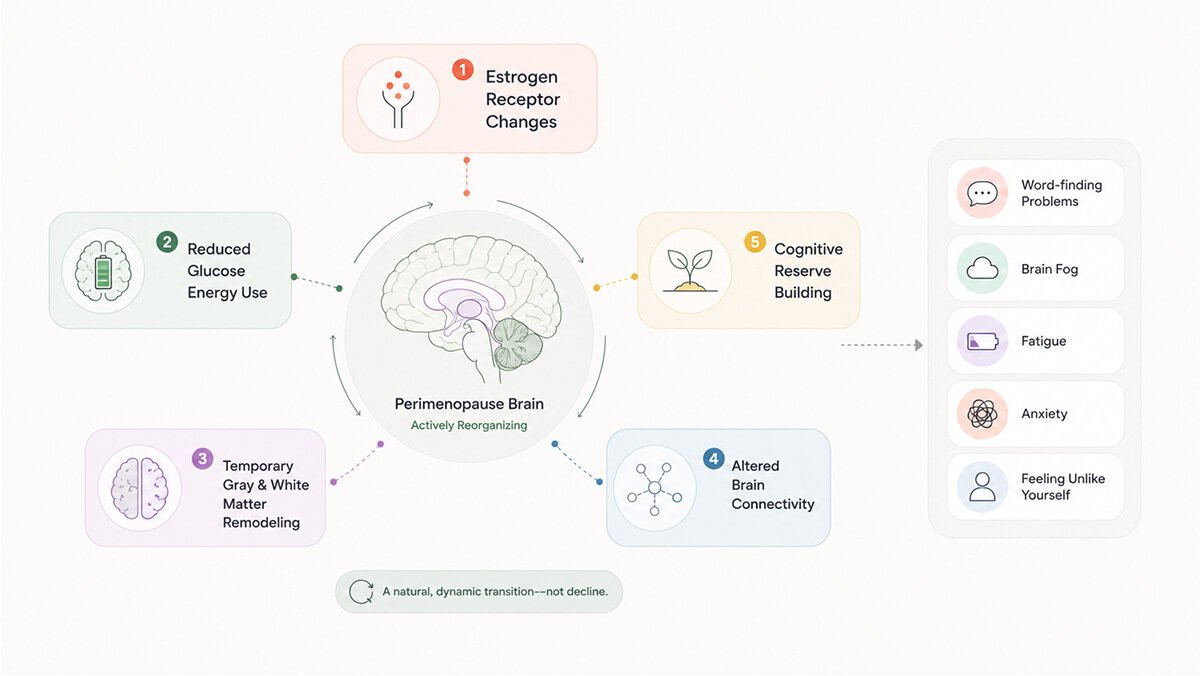
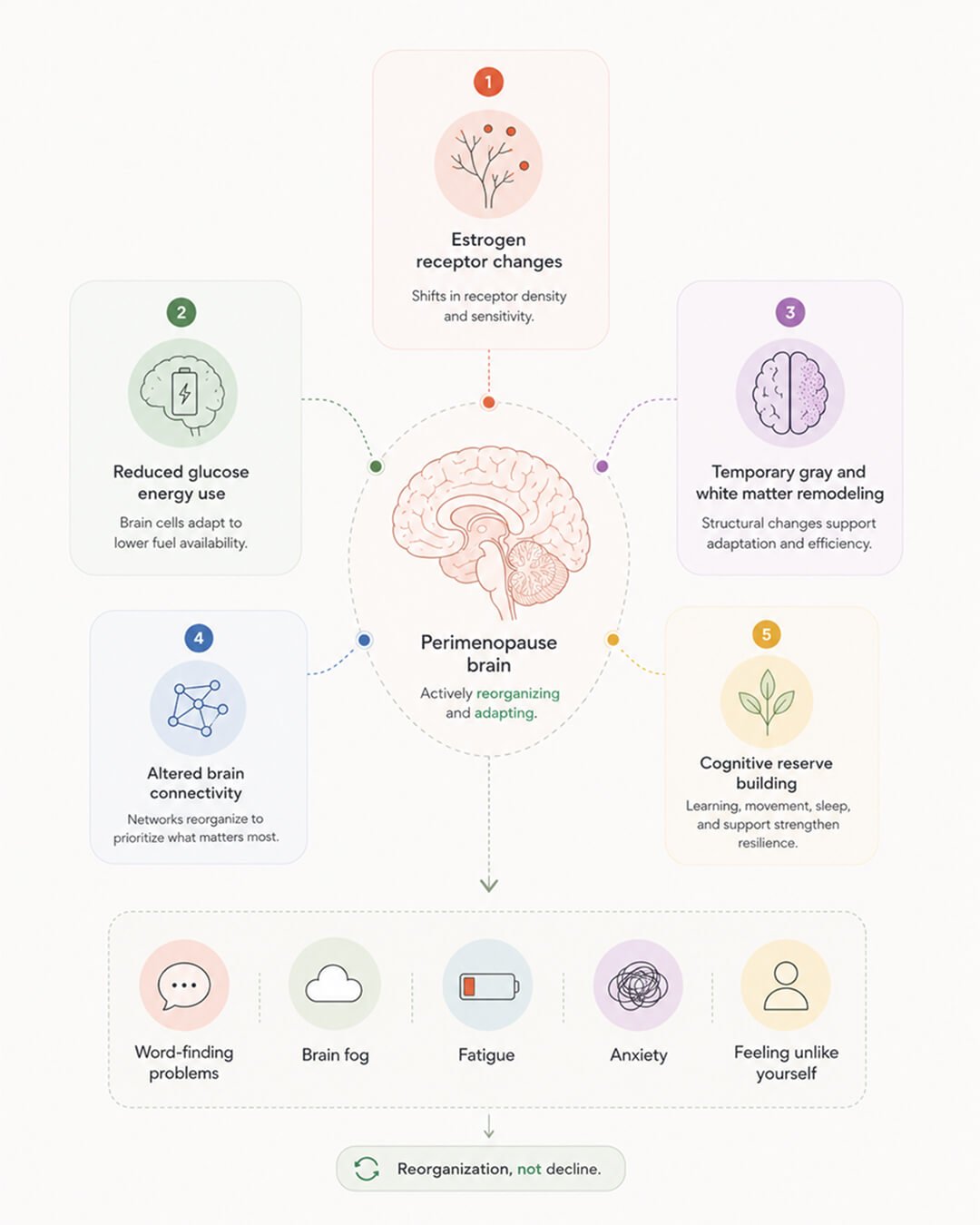
Curious Fact. During perimenopause, the brain’s white matter undergoes a temporary shift to resemble a male brain. Once you reach postmenopause, however, the white matter returns even denser and more organized than that of your male peers.5 This suggests that your brain isn’t simply declining during this transition; it is actively reorganizing itself. This structural “remodel” is a major reason why perimenopause can feel so cognitively strange and women simply say, “I don’t feel like myself.” Because the brain is in such a flexible state, the choices you make and the interventions you start during midlife have a disproportionately powerful impact on your long-term health.
The brain remains plastic at every age. By staying mentally active in midlife, you build cognitive reserve. This mental resilience can reduce your risk of dementia and cognitive decline by about 50%, providing a powerful shield even if physical changes occur in the brain.6,7 The protection you build now will sustain you in your seventies. This leads us to the single most effective action you can take to safeguard your future.
Of the 14 risk factors identified by the Lancet Commission, several focus on how we engage our brains: education, social connection, managing depression, and even treating hearing loss.1 These factors reveal a consistent pattern: the brain strengthens itself when it is challenged and put to work, but it begins to lose its resilience when it is no longer being used. To stay healthy, the brain needs to stay busy.
The most direct evidence comes from animal research. In rats, the hippocampus produces thousands of new neurons each day, and most of them die within weeks. Effortful, difficult, successful learning rescues these new cells from death; easy learning does not.8 The animal that learns something hard keeps the new neurons; the animal that doesn’t learn loses them.
In humans, we see the same pattern as in rats. Among German adults tracked across several years, average cognitive skills increased into the forties before declining. However, the decline only occurred in people who didn’t regularly challenge their minds.9 In contrast, white-collar workers who frequently used their cognitive skills continued to see improvements well past their forties. Women had larger skill losses than men at older ages, particularly in math.9 How much we use our brains directly influences how well they age.
The brain only changes and grows when it is forced to work harder than usual, a state scientists call sustained mismatch.¹⁰ Doing what you already know well does not trigger it. For example, when older adults learned entirely new skills like quilting or digital photography, their cognitive health measurably improved. In contrast, passive activities like casual socializing or doing familiar hobbies showed no such benefit.10 Variety matters too. Middle-aged adults who engaged in several different types of mental challenges, such as complex work, social connection, and stimulating hobbies, had better memories than those who focused on only one area or none at all.11
The findings applicable for healthy aging are similar for women in midlife. When researchers combined data from multiple studies on cognitive training during the menopause transition, they found clear improvements in memory, focus, and problem-solving. While the boosts in mental performance aren’t massive, they are consistent and reliable across different types of scientific research. This confirms that targeted mental exercise actually works during this transition.12
Curious Fact. A long-term study of over 3,400 British civil servants found that verbal memory declined 38% faster once they retired. While they were still employed, those in higher-level, more complex roles saw slower memory loss but that advantage disappeared the moment they stopped working.¹³ Once retired, everyone’s memory began to decline at a similar rate, regardless of their former job title. This suggests that the daily mental demands of a challenging career provide a shield for the brain, and when that demand is removed, the protection goes with it.
It is tempting to step back when brain fog and fatigue make complex tasks feel overwhelming. However, pulling away removes the very mental stimulation that protects your brain. When you reduce your cognitive workload because things feel more difficult, you may unknowingly speed up the mental decline you want to avoid. Staying engaged in work that requires deep focus, complex judgment, and problem-solving is actually one of the most powerful ways to protect your brain during this transition. For healthy aging during menopause, sustained cognitive challenge appears to protect long-term brain function better than passive mental activity.
In practice, keeping your brain “loaded” doesn’t mean using brain-training apps. While puzzle games might make you better at those specific games, they rarely improve your overall mental ability.10 The real benefits come from genuine challenge: staying in a complex job, learning an entirely new skill, like a language, an instrument, or a subject outside your expertise, and reading difficult material. It also includes active social lives that involve debate and humor rather than just sitting on the sidelines. Verbal memory, which often affected during perimenopause, is especially responsive to this kind of ongoing linguistic challenge and use.7
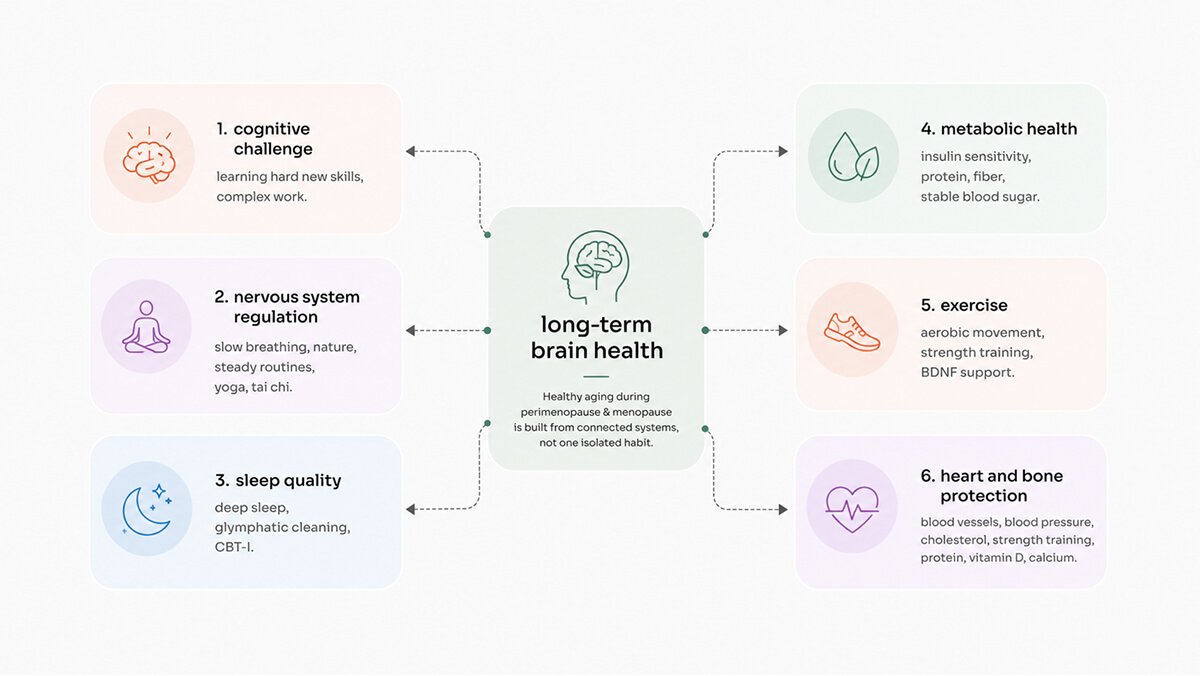
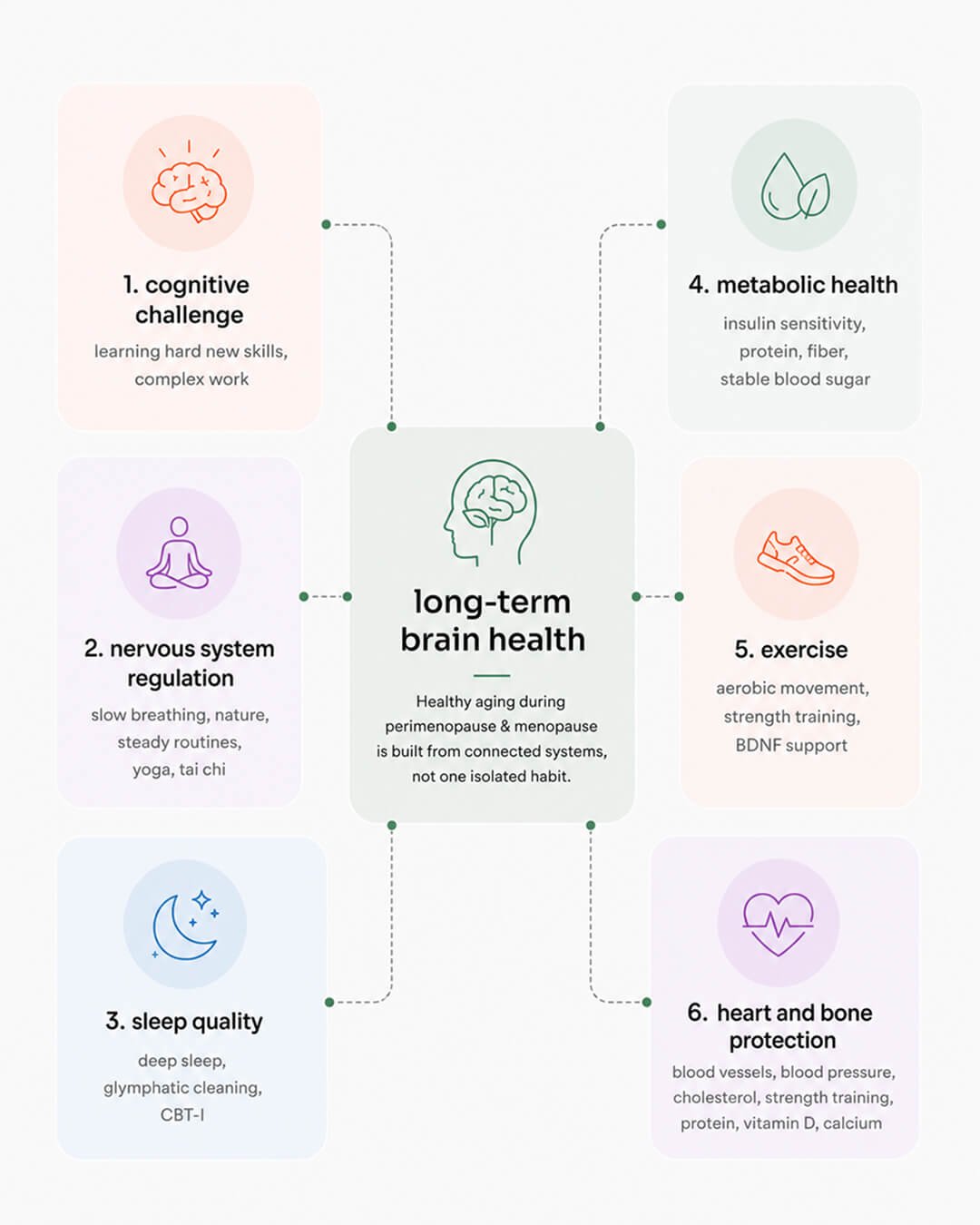
The nervous system changes during the menopause transition, and most women feel the impact long before they understand the cause. A stressor that you once brushed off in an hour, like a tight deadline or a difficult conversation, might now leave you feeling rattled for an entire day. This happens because your stress response system becomes more sensitive as estrogen and progesterone levels fluctuate. The change is biological, not psychological; your body is simply reacting more intensely to the same pressure.
Estrogen and progesterone typically help manage the HPA axis, which is the system responsible for releasing cortisol when you are stressed. As these hormone levels fluctuate and drop during perimenopause, the brain’s primary “braking” system, GABA signaling, becomes less effective.14 As a result, it becomes physically harder for your body to switch off its cortisol response. This is a key biological reason why anxiety, irritability, and depression often surface during this time. It also explains why the exact same workload or stress level that you handled easily in the past now feels significantly heavier and more draining.15
The autonomic nervous system also undergoes a transformation. Your vagal tone (a measure of your body’s ability to relax and recover) shifts after menopause. Specifically, the “rest and digest” system loses its lead, and the “fight or flight” system begins to take over. Women who previously benefited from a strong internal buffer against stress find that this protection weakens. As heart rate variability drops, the impact reaches far beyond your heart health, affecting how your entire body responds to the world around you.16,17
A long-term study of more than 2,700 adults found that those with low heart rate variability experienced faster mental decline. They were losing cognitive ground about three years faster every decade than their peers. Vagal tone is essentially a report card for how well your brain and body communicate. When this coordination is strong, it acts as a protector for your memory and your ability to focus as you age.18
The interventions that support nervous system regulation are simple but require consistency. Slow nasal breathing for a few minutes daily increases vagal tone, while regular moderate-intensity aerobic exercise shifts heart rate variability upward over weeks. Other habits like spending time in nature, enjoying unhurried time with friends, and keeping a steady sleep schedule all support this same system. Practices like yoga and tai chi also show clear benefits, especially when practiced regularly. The real, measurable shifts happen as these habits accumulate over weeks and months. The strongest evidence suggests that combining these practices works much better than doing any single one alone.
Sleep is when your brain does much of its essential cleaning. During deep, slow‑wave sleep, a waste‑removal network called the glymphatic system helps flush out metabolic debris, including proteins like amyloid‑β and tau that are linked to Alzheimer’s disease.19 When sleep is consistently short or fragmented, this cleaning process becomes less efficient. Long‑term studies show that regularly sleeping about six hours or less in midlife is associated with roughly a 30% higher risk of developing dementia later in life, compared with getting around seven hours a night.20
During the menopause transition, sleep is often disrupted by several overlapping factors. Hormonal changes directly affect the brain circuits that control your internal clock, body temperature, and alertness. Hot flashes and night sweats break your rest into fragments, while falling progesterone levels remove a natural sedative effect. At the same time, a more reactive stress system means that if you wake up during the night, it is much harder to drift back to sleep. When you add in mood changes like anxiety, sleep becomes even more elusive.21 For many women, this results in years of poor rest at the exact moment the brain is most vulnerable to long-term damage.
The impact of poor sleep on brain aging is direct and significant. Long-term studies show that women who struggle with persistent insomnia during the transition to menopause experience poorer mental performance and faster cognitive decline. Furthermore, reaching menopause at an earlier age is often linked to both worse sleep and lower cognitive function.22 This happens for several reasons: poor sleep prevents the brain from cleaning itself, increases inflammation, and disrupts how the body handles sugar and stress hormones. Sleep isn’t just one factor among many; it is the foundation that affects every other aspect of your health. Sleep quality is one of the strongest predictors of brain health after 40 and plays a major role in healthy aging during perimenopause.
The options for treating sleep issues during menopause are varied, but some have much stronger evidence than others. Cognitive Behavioral Therapy for Insomnia (CBT-I) is the most proven non-hormonal approach and can be done with a therapist or through a reputable app. Hormone therapy is also effective when hot flashes are the main cause of poor sleep; specifically, estrogen patches combined with micronized progesterone have shown the best results in clinical trials.23 It is normal for sleep not to improve the very first night, as your body needs several weeks to recalibrate. Patience is often more important than switching treatments too quickly.
Basic sleep hygiene, like a cool room, consistent bedtimes, and avoiding screens, is more critical now than it was in your younger years because your body has less room for error. Alcohol requires special caution: while it might feel relaxing, it actually blocks the deep sleep your brain needs to clean itself. What used to be a simple way to unwind now comes with a cost to your cognitive health.
At the level of the brain, the story of menopause is really about energy. Your brain relies on glucose for fuel, and when your body processes insulin effectively, that fuel moves into your brain cells efficiently. However, when this process breaks down, a condition known as insulin resistance, the brain’s energy supply begins to fail. During perimenopause, the brain’s ability to use glucose drops measurably, creating a pattern that looks very similar to the early stages of Alzheimer’s disease.24
Mosconi’s imaging work showed this directly. In healthy women in their forties and fifties, the brain’s ability to use glucose drops in the areas most vulnerable to Alzheimer’s. This decline begins during perimenopause and continues through postmenopause, occurring alongside a drop in mitochondrial function, the “power plants” of your cells.24 To make matters worse, a woman’s overall insulin sensitivity usually worsens after menopause. While women generally process blood sugar better than men before this transition, they lose that advantage afterward.25 The body becomes less able to use glucose just as the brain is asking for steadier supply.
The stability of our brain’s communication networks follows a unique path throughout our lives. These networks begin to destabilize significantly during our forties, a shift driven largely by how our bodies handle glucose. Research has identified a critical window between the ages of forty and sixty where we have the most influence over this process. During this time, metabolic changes have a big impact on keeping the brain stable. Interestingly, ketones, a backup fuel source that brain cells can use even without insulin, have shown the strongest ability to restabilize these networks.26 This is the exact window most women are in when they begin looking for answers, and it represents a time of genuine opportunity to protect the brain’s future.
The key to success is improving insulin sensitivity, not just focusing on weight loss. Strength training is the most effective tool because muscle acts as your body’s main sponge for glucose; the more muscle you have, the better your body manages blood sugar. Regular aerobic exercise also helps your body process glucose more efficiently. Your diet plays a major role too. Focusing on protein and fiber rather than refined carbs keeps blood sugar stable. You might also try eating within a 10 to 12-hour window, which provides benefits without the stress of extreme fasting. Finally, getting enough sleep is essential for regulating how your body handles sugar. The window between ages 40 and 60 is when these habits have the most powerful impact on your brain’s energy, and the benefits grow the more consistent you are.
Exercise is effectively the closest thing we have to a miracle drug for the brain. Its power comes from a molecule called BDNF, which acts like fertilizer to help brain cells grow and form new connections. A single session of aerobic exercise gives you an immediate boost in BDNF, and regular training raises your baseline levels over time.27 For women specifically, programs that combine cardio, strength training, and activities requiring coordination (like dance or complex movements) consistently improve BDNF levels. This leads to measurable gains in mental performance, including how fast you process information and how well you can focus and plan.28,29
Strength training is twice as valuable during midlife. Because muscle is the body’s primary tool for processing glucose, lifting weights improves your insulin sensitivity. At the same time, it protects the muscle mass that typically disappears as estrogen levels drop. Ultimately, your lean muscle mass determines how well your brain is fueled and how stable your blood sugar remains. Building this foundation now is what ensures you stay sharp and independent well into your seventies and eighties.
When it comes to how much exercise you need for brain health, the research suggests a clear recipe: at least three sessions of moderate cardio a week, like brisk walking, cycling, or swimming, plus two days of strength training. Dance is a particularly effective option. It often leads to a bigger boost in brain-growing BDNF and memory-related brain volume than standard workouts. This is likely because dance forces your brain to work as you learn new steps and sequences.30 If a traditional gym routine doesn’t appeal to you, this is your permission to find a more engaging way to move.
It is helpful to know that your BDNF levels spike immediately after you exercise. You can take advantage of this by pairing your most demanding mental tasks, like a tough meeting, a writing session, or a language lesson, with a recent walk or workout.³¹ The brain is physically better at learning and absorbing information right after physical activity. Stacking your exercise right before a period of learning is a simple habit with a powerful biological foundation.
The impact of estrogen loss on your heart and bones isn’t a separate issue, it is connected to your brain health. Estrogen helps keep your blood vessels, including the tiny ones that feed your brain, flexible and healthy. When estrogen levels drop, vascular function declines, cholesterol levels often worsen, and the risk of heart disease climbs.32 As a result, blood flow to the brain also decreases during the transition from perimenopause to postmenopause.33 Because your heart and brain share the same network of blood vessels, the habits that protect one also protect the other. This is why factors like high blood pressure, high cholesterol, diabetes, and obesity increase the risk of dementia. They all damage the pathways that keep your brain supplied with blood.1
Bone density loss picks up speed in the year before your final period and continues rapidly for several years afterward. SWAN studies shows that over a decade, women can lose about 10% of their bone mass in the spine and hip.³⁴ The habits that protect your bones, like strength training, getting enough protein, and ensuring you have adequate Vitamin D and calcium, are the exact same ones that support your brain and metabolic health. Whether you are lifting weights or focusing on nutrition, your efforts are doing double duty. This simplifies your routine: one healthy lifestyle supports your entire body.
Healthy aging during perimenopause and menopause is about more than just managing symptoms; it is about protecting the mental sharpness you’ve spent a lifetime building and the physical foundation that makes it possible. While wellness culture often focuses on how your face or weight changes in isolation, the actual biology is far more complex and rewarding to understand.
The 2024 Lancet Commission identified 14 controllable factors that account for nearly half of dementia cases worldwide. Most of these can be addressed right now, during your forties and fifties. Your brain is capable of doing incredible, complex work well into your eighties or nineties, and these midlife years are when your actions have the most power to ensure that happens. Ultimately, your body belongs to you, not your family, your partner, or your job. It is yours to protect.
Dr. Jūra Lašas
1.
Livingston et al. Dementia prevention, intervention, and care: 2024 report of the Lancet standing Commission (2024). https://doi.org/10.1016/s0140-6736(24)01296-0
2.
Hara et al. Estrogen Effects on Cognitive and Synaptic Health Over the Lifecourse (2015). https://doi.org/10.1152/physrev.00036.2014
3.
Mosconi et al. In vivo brain estrogen receptor density by neuroendocrine aging and relationships with cognition and symptomatology (2024). https://doi.org/10.1038/s41598-024-62820-7
4.
Mosconi et al. Sex differences in Alzheimer risk (2017). https://doi.org/10.1212/wnl.0000000000004425
5.
Raikes et al. White matter microstructural and macrostructural profiles during midlife reveal sex differences between men and women at different menopausal stages (2025). https://doi.org/10.1038/s41598-025-24136-y
6.
Nelson et al. Cognitive Reserve, Alzheimer’s Neuropathology, and Risk of Dementia: A Systematic Review and Meta-Analysis (2021). https://doi.org/10.1007/s11065-021-09478-4
7.
Wang et al. Association of lifelong exposure to cognitive reserve-enhancing factors with dementia risk: A community-based cohort study (2017). https://doi.org/10.1371/journal.pmed.1002251
8.
Shors et al. Use it or lose it: how neurogenesis keeps the brain fit for learning (2012). https://doi.org/10.1016/j.bbr.2011.04.023
9.
Hanushek et al. Age and cognitive skills: Use it or lose it (2024). https://doi.org/10.1126/sciadv.ads1560
10.
Park & Bischof. The aging mind: neuroplasticity in response to cognitive training (2013). https://doi.org/10.31887/dcns.2013.15.1/dpark
11.
Bransby et al. The relationship between cognitive engagement and better memory in midlife (2022). https://doi.org/10.1002/dad2.12278
12.
Zhu et al. Cognitive Training During Midlife: A Systematic Review and Meta-Analysis (2024). https://doi.org/10.1007/s11065-024-09649-z
13.
Xue et al. Effect of retirement on cognitive function: the Whitehall II cohort study (2017). https://doi.org/10.1007/s10654-017-0347-7
14.
Gordon et al. Ovarian hormone fluctuation, neurosteroids, and HPA axis dysregulation in perimenopausal depression: a novel heuristic model (2015). https://doi.org/10.1176/appi.ajp.2014.14070918
15.
Hantsoo et al. The role of the hypothalamic-pituitary-adrenal axis in depression across the female reproductive lifecycle (2023). https://doi.org/10.3389/fendo.2023.1295261
16.
Liu et al. Effects of estrogen on gender-related autonomic differences in humans (2003). https://doi.org/10.1152/ajpheart.00256.2003
17.
Geovanini et al. Age and Sex Differences in Heart Rate Variability and Vagal Specific Patterns – Baependi Heart Study (2020). https://doi.org/10.5334/gh.873
18.
Jandackova et al. Midlife heart rate variability and cognitive decline: A large longitudinal cohort study (2024). https://doi.org/10.1016/j.ijchp.2024.100518
19.
Hauglund et al. Norepinephrine-mediated slow vasomotion drives glymphatic clearance during sleep (2024). https://doi.org/10.1016/j.cell.2024.11.027
20.
Auranen. Cognition, sleep and estrogen: menopause is really not just about hot flashes (2022). https://doi.org/10.1111/aogs.14471
21.
Maki et al. Sleep disturbance associated with the menopause (2024). https://doi.org/10.1097/gme.0000000000002386
22.
Shieu et al. The Interplay Among Natural Menopause, Insomnia, and Cognitive Health: A Population-Based Study (2023). https://doi.org/10.2147/nss.s398019
23.
Pan et al. Different regimens of menopausal hormone therapy for improving sleep quality: a systematic review and meta-analysis (2022). https://doi.org/10.1097/gme.0000000000001945
24.
Mosconi et al. Perimenopause and emergence of an Alzheimer’s bioenergetic phenotype in brain and periphery (2017). https://doi.org/10.1371/journal.pone.0185926
25.
Gado et al. Sex-based differences in insulin resistance (2024). https://doi.org/10.1530/joe-23-0245
26.
Antal et al. Brain aging shows nonlinear transitions, suggesting a midlife “critical window” for metabolic intervention (2025). https://doi.org/10.1073/pnas.2416433122
27.
Szuhany et al. A meta-analytic review of the effects of exercise on brain-derived neurotrophic factor (2015). https://doi.org/10.1016/j.jpsychires.2014.10.003
28.
Vaughan et al. The effects of multimodal exercise on cognitive and physical functioning and brain-derived neurotrophic factor in older women: a randomised controlled trial (2014). https://doi.org/10.1093/ageing/afu010
29.
Farrukh et al. Association of exercise, brain-derived neurotrophic factor, and cognition among older women: A systematic review and meta-analysis (2023). https://doi.org/10.1016/j.archger.2023.105068
30.
Rehfeld et al. Dance training is superior to repetitive physical exercise in inducing brain plasticity in the elderly (2018). https://doi.org/10.1371/journal.pone.0196636/
31.
Nilsson et al. Acute increases in brain-derived neurotrophic factor in plasma following physical exercise relates to subsequent learning in older adults (2020). https://doi.org/10.1038/s41598-020-60124-0
32.
Fasero et al. Cardiovascular Disease Risk in Women with Menopause (2025). https://doi.org/10.3390/jcm14113663
33.
Guo et al. Effect of Menopause Status on Brain Perfusion Hemodynamics (2023). https://doi.org/10.1161/strokeaha.123.044841
34.
Greendale et al. Bone mineral density loss in relation to the final menstrual period in a multiethnic cohort: Results from the Study of Women’s Health Across the Nation, SWAN (2012). https://doi.org/10.1002/jbmr.534

Mood & Energy Solutions

Fatigue Causes & Types

Fatigue Causes & Types

Workplace Strategies

Menopause at Work

Brain Fog at Work

Brain Fog at Work

Is This Perimenopause?

Is This Perimenopause?

Nutrition & Supplements

Workplace Strategies

Menopause Science

Menopause Science

Brain Fog Solutions

We use cookies and similar technologies to ensure the proper functioning of our website, personalize content, provide social media features, and analyze traffic. By clicking “I Agree”, you consent to the use of these technologies.
No results