19 November 2025
How Clinical Trials Empowered My Approach to Menopause Science

Reading time 7 min.
Reading time 7 min.
Years spent designing and running basic science and clinical trials shape the way I think about information. I have a PhD in neurobiology and more than 15 years in clinical research working with biopharma and biotech companies. When you work in trials, you learn quickly that not all data are equal. That’s the lens I use to weigh claims about neuroscience and perimenopause or menopause before I share menopause science here at Ticking Biology. The standard I’d apply to a Phase III protocol is the same one I apply to a study about brain fog, hot flashes, or hormone therapy. Most menopause content on social media is not based on evidence.


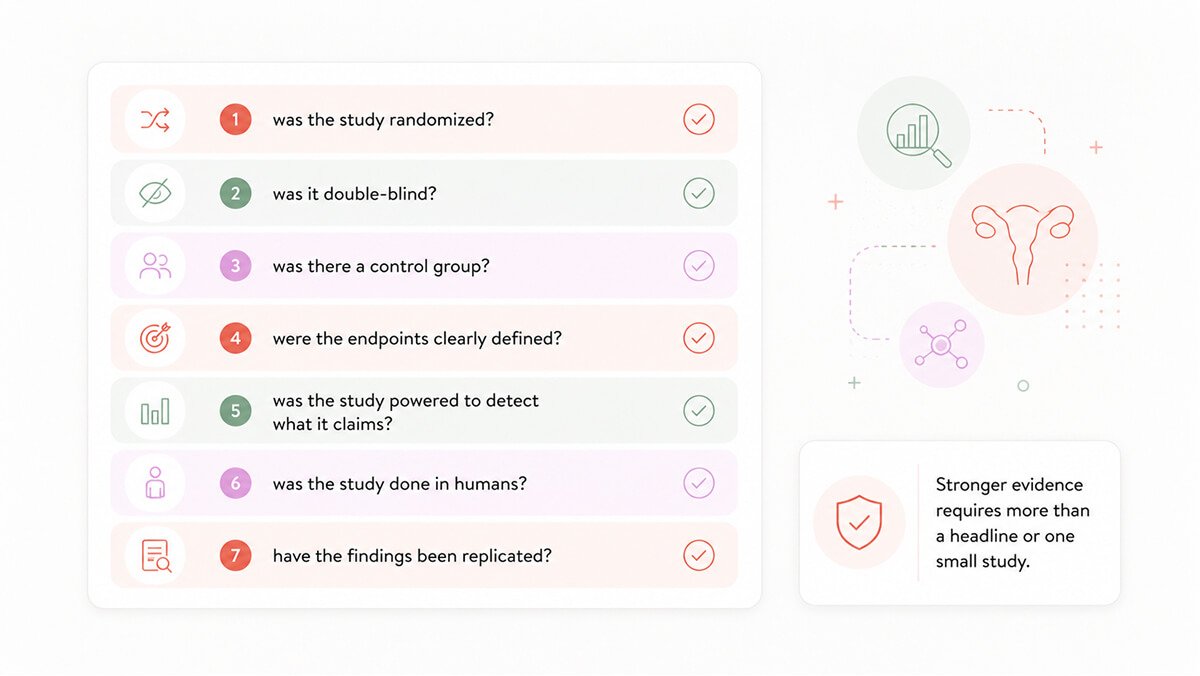
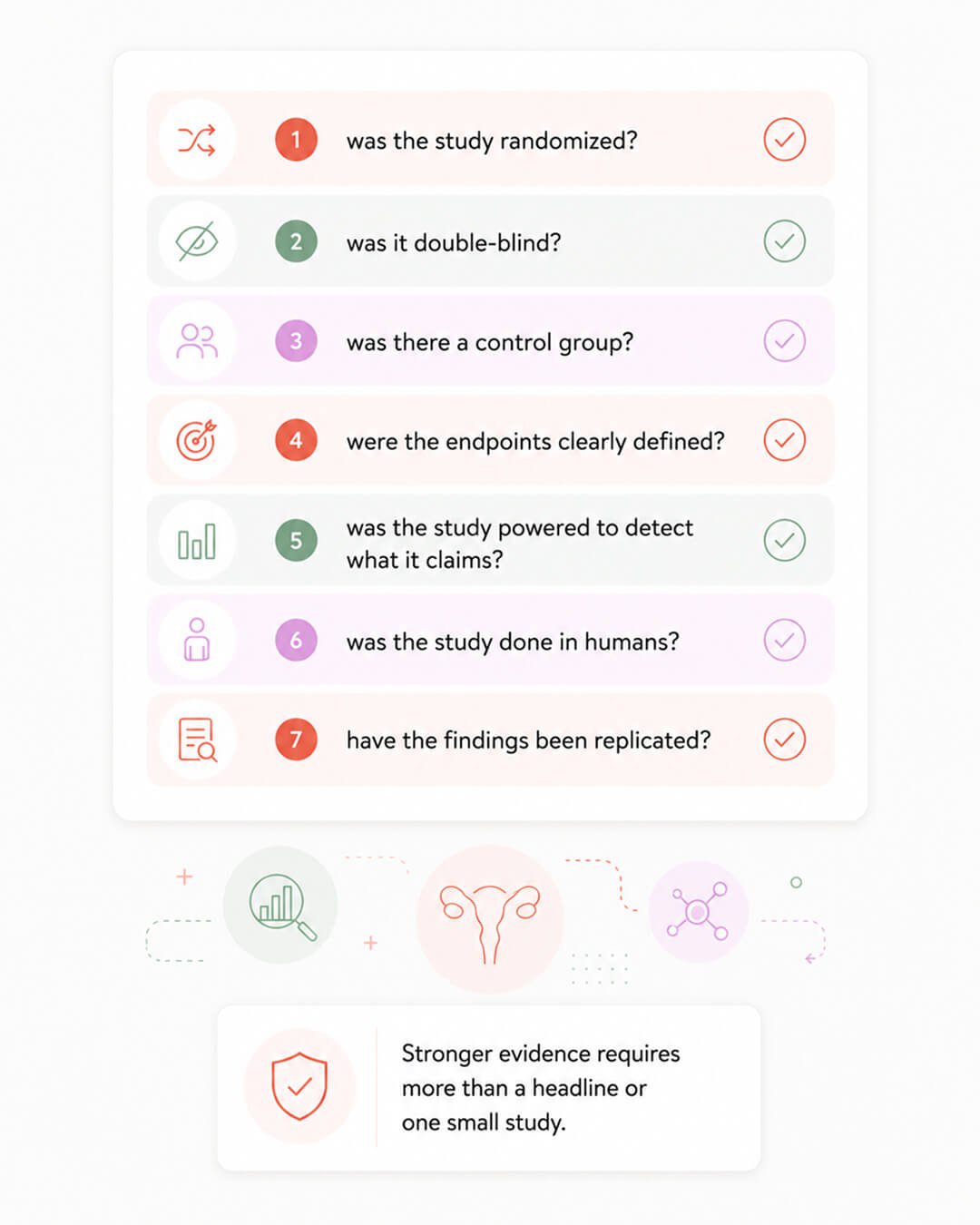
The strength of any finding depends on how it was generated. Was the study randomized? Was it double-blind? Was there a control group? Were the endpoints clearly defined? Was it powered to find what it claims to find? These details are what separate meaningful results from noise.
That’s why I don’t rely on wellness trends, influencer claims, or one-off mechanistic mouse studies. The standard I use for Ticking Biology is the same one I’d apply in my day job: peer-reviewed, human studies with transparent methods that have been replicated. Evidence has to be reproducible, not just headline-worthy. That principle sits at the center of trustworthy menopause science.
A single small trial is a signal worth following, not a recommendation. The difference between the signal and a guideline gets lost in wellness translation.
I don’t automatically assume that every medical professional can read a study critically. Many doctors are brilliant clinicians, but few have been formally trained in research methodology or critical analysis. This isn’t a criticism. Medical education simply isn’t structured to teach those skills. The same is true for menopause itself: most physicians receive little formal training in menopause care, and they haven’t been taught how to read a paper for sample size, blinding, or statistical power either.
“So when I read a study, I read it like a scientist, not like a prescriber.”
Neuroscience and neurobiology are my actual training. That means I can read the brain research underneath perimenopause symptoms: how estrogen acts on receptors in the hippocampus and prefrontal cortex; why those regions matter for memory, focus, and mood; what’s known and what’s still being worked out. Clinical-trial design and pharmacology are the second layer. I understand how trials of hormone therapy, antidepressants, and sleep medications get designed and read. I know how dosing works, what “body-identical” actually means, and where the safety and side-effect numbers actually come from.
Rigor matters, especially in perimenopause, where the information landscape is crowded with conflicting advice. Supplements are marketed as miracle cures. “Bioidentical” hormones get oversimplified. Nutrition fads recycle under new labels every couple of years. The advice is confusing for women searching for help on how to feel and perform better.
By reading the original research (statistical analyses, inclusion criteria, adverse event reports, replication), I can separate what genuinely helps from what’s simply trending. When I write about supplements or behavioral interventions for perimenopausal brain fog, fatigue, or anxiety, I structure the piece the way a scientific review would: evidence strength named clearly, human-study outcomes prioritized, known limitations flagged, and animal-only findings labeled as such.
I’m also a woman in perimenopause, searching for answers that aren’t watered down or oversimplified. I’ve learned firsthand that misinformation spreads fast when evidence is scarce. We are left guessing whether what we feel is “normal,” while science has many answers that could help us keep our professional edge and continue thriving in this period of our lives.
My goal at Ticking Biology is to make evidence-based menopause science, understandable without losing accuracy.
I’m not a wellness influencer guessing what might work. I’m a neurobiologist and clinical-trials professional, reading neuroscience and perimenopause/menopause research the way I’d read any clinical protocol and translating it for women who deserve more than reassurance.
Rigor isn’t a stylistic choice on this site. It’s the condition under which I’m willing to put a finding in front of you. Our health, our brains, and our careers deserve nothing less.
Dr. Jūra Lašas
1.
Kling, J. et al. Menopause Management Knowledge in Postgraduate Family Medicine, Internal Medicine, and Obstetrics and Gynecology Residents: A Cross-Sectional Survey. (2019) https://doi.org/10.1016/j.mayocp.2018.08.033
2.
Allen, J. et al. Needs assessment of menopause education in United States obstetrics and gynecology residency training programs. (2023) https://doi.org/10.1097/gme.0000000000002234

Menopause Science
Menopause Science
We use cookies and similar technologies to ensure the proper functioning of our website, personalize content, provide social media features, and analyze traffic. By clicking “I Agree”, you consent to the use of these technologies.
No results